Martin Corey is a 63 year-old-man imprisoned in the north of Ireland.
Martin Corey.
On April 16, 2010, Martin’s house in Lurgan was visited by members of the Police Service of Northern Ireland (PSNI) and Martin was arrested.
When he queried what the charges were, Martin was told that the police officers “did not know”. And that all they were told was to arrest Martin.
Martin Corey is a Republican who, in his youth fought against the foreign occupation of his native land. It was during this struggle for freedom that Martin Corey was charged with the murder of two members of the Royal Ulster Constabulary (RUC), the forerunner of the PSNI. Martin was found guilty of the charge and sentenced to life imprisonment in December 1973.
Martin served just short of the next 19 years behind bars; he was released in June 1992.
Martin Corey did not sign any documents imposing conditions on his release.
Martin returned to Lurgan, where he set up a successful business as the local grave digger, formed a long-term relationship and settled down to a peaceful life. That was until his arrest in 2010. Martin Corey is still in prison and he still does not know what the charges against him are. Martin’s legal team also do not know what the charges are and neither does any judge hearing the case against Martin, because according to the Northern Ireland Office (NIO), he is being held on “Undisclosed or Secret Charges”. A special advocate, appointed by the NIO, can view the evidence and tell the judge what they can do. This makes a mockery of the judicial system when a politician, unelected in the North of Ireland, can make the rules regarding a person’s freedom. Martin Corey is selectively interned by an unjust British system.
Martin Corey is entitled as a life sentence prisoner to a parole hearing every 12 months; this is continually adjourned or not even scheduled. And the conditions that Martin is being kept under are a disgrace. Mail being kept from him for weeks at a time, prison craft that he has made, smashed by vindictive prison officers, as well as being denied proper medical or dental treatment in a reasonable time.
In May 2012, Martin appealed his imprisonment based on the fact he had not been charged with any crime nor had he been brought before a judge. Justice Treacey heard the appeal and in his verdict stated that Martin’s human rights had been breached and ordered Martin Corey be released immediately and placed no conditions on the release.
Martin returned to Maghaberry Prison to pack his belongings, his family travelled from Lurgan to pick him up and to take him home. It was whilst Martin was waiting in the prison reception that prison officers informed him that the Secretary of State had ordered him returned to the cells. The NIO had appealed Justice Treacey’s decision, but only after the Justice had boarded a plane and was about to leave the country, otherwise Justice Treacey would have had to hear any appeals. With Treacey out of the way a patsy of the British NIO upheld their appeal and hence Martin was returned to the cells.
When Martin’s legal team found out they immediately launched legal action against the appeal by the NIO, but to no avail. Martin finally got to appeal the decision in the High Court on July 11, more than six weeks after the decision by Justice Treacey, and that appeal the NIO overturned in hours.
The Lord Chief Justice upheld the ruling and stated that Martin’s case should be reheard on November 26, 2012. At the rehearing a panel of three appeals judges upheld the decision of the NIO to keep Martin incarcerated.
Martin’s legal team then applied to the High Court for permission to take their case before the Supreme Court in London. Martin’s legal team were very confident of winning in the Supreme Court, but in early May 2013, their euphoria was short lived as the appeal was denied without any valid reason being given. If you look beyond this denial, you will see British intransigence at its best.
By denying Martin the right to appeal to the Supreme Court, they have effectively blocked his application to the European Court of Human Rights, as he has not exhausted all domestic avenues. British politicians are very quick to point the finger in regards to human rights abuses around the world, but even quicker to put the blinkers on when it is occurring in their own backyard and perpetrated by their own people.
The Good Friday Agreement promised Equality, Justice and Human Rights for all. This obviously does not include Republicans who do not agree with the way the peace is being portrayed or do not agree with the ruling parties. Martin Corey is but one of these people who are suffering from a great injustice at the hands of a vindictive British government.
Martin Corey is an innocent man; he is innocent of any wrong doing. If the authorities believe that Martin is guilty of a crime, then the law of the land must prevail, charge him and bring him before a court of law, where he has the right to defend himself, not having to fight an invisible foe in the guise of undisclosed charges.
7 Powerful Ways to Maintain Your Privacy and Integrity Online
By Eliot Estep
June 14, 2013 "Information Clearing House -The recent NSA leaks from whistleblower Ed Snowden have publicly confirmed that digital privacy does not exist. The federal government and intelligence agencies have direct server access to the world’s most popular sites and services including Facebook, Google, Microsoft, Apple, and more. This means that all of your data when using these services including Skype, YouTube, etc has been compromised and can be used against you whenever strategically necessary.
Always remember, you are being recorded and monitored regardless of whether you have done anything wrong or not. This includes your emails, internet activity, searches, banking activity, passwords, etc. Basically everything to build a complete profile about who you are, how you think, how you live, etc. This is very powerful data gathering and the goal of the intelligence agencies is nothing less than Total Information Awareness to be used to control and manage populations.
For these reasons, I have compiled some helpful tips to help you maintain your privacy and integrity when using the Internet. These are by no means comprehensive, but they can be quite useful and give you some semblance of peace when browsing.
1. Use StartPage.com for all your searches. Known as “the world’s most private search engine”, StartPage will allow you to search anonymously and securely through Google. It is probably the only search engine that does not collect or share any personal information about you. You can even access pages through a proxy quickly and easily. StartPage functionality can be easily added to your browser for all searches made through the address bar. If you value your privacy, this is really a no-brainer.
If you use Google, Bing, Yahoo, etc then everything you search is logged to your IP address and is used to build a comprehensive profile about all your online activity. This means that the government literally has the ability to know everything you’ve been interested in, how you type (thus, how you think), and much more. Protect your searches!
2. Consider using an Anonymizer such as Tor to protect your identity. Tor prevents anyone from learning your location, browsing habits, and is an extremely effective tool against network surveillance and traffic analysis. Tor is essentially a network of virtual tunnels run by volunteers that allows your real IP address to remain hidden and undetectable when browsing the Internet. It is used by whistleblowers, hackers, and all those who value anonymity. You can also use it to access sites that your ISP has blocked or banned. Keep in mind, if you use Tor to access personally-identifying sites like Facebook then you pretty much lose your ability to remain anonymous. Learn more about this powerful software and please use it responsibly! To get started quickly, please download the Tor Browser Bundle. Using this software wisely and effectively will likely require changing your browsing habits, so be aware of this.
3. Consider using a private and secure social network like Pidder. This is a private social network that uses encrypted communication and offers the ability to remain anonymous. If you are truly looking for ways to stay in touch with close ones in a uncompromised manner, this could be the site for you. While it will not have the userbase of Facebook, this is still an excellent alternative for secure social networking.
4. Use a firewall and a secure wireless connection. Protecting your inbound and outbound network traffic is essential. There are many free software options available for this. I cannot guarantee the integrity of these programs, but I personally recommend Little Snitch for Mac users. It appears thatOutpost may be a good alternative for Windows. The key is to be able to see what services/sites are trying to send/receive data over your connection. The more stringent your firewall rules are, the better. Keep your computer clean by using some kind of anti-spam/spyware software and minimize your use of highly sketchy sites.
5. Delete your cookies regularly and log out of Facebook when you are not actively using it. Almost everytime you visit a site, you download a cookie from that site, which is often used to track and collect data about you, the sites you visit, etc. Therefore, deleting cookies and temporary internet files from your browser frequently is necessary. I recommend CCleaner as an effective way to do this. Most people leave a Facebook tab open and continue browsing, not realizing that every page that has a “Like” button actively logs and tracks their online activity. Facebook collects all your browsing data and then sells it to third parties, including passing it onto intelligence agencies. Therefore, when you are not actively using Facebook, be sure to log out! Why should they know everything you’re up to online?
6. Cover up or disconnect your webcam when you are not using it. Did you know that your webcam can be secretly activated without you being aware of it? Hackers and intelligence agencies have the ability to do this, so effective countermeasures must be taken here. This can be done WITHOUT the indicator light coming on, so you won’t even know that you are being watched or recorded. This is why I recommend taping over or covering up your webcam when you’re not using it. Why take the risk? Do you really want the government to have the ability to spy on you while you are in your bedroom? The same thing can be done on cellphone cameras/microphones, so be aware of that too. The only way your phone cannot be used to track/record you is if the battery is taken out, which is another reason why many new smartphones come with non-removable batteries these days.
7. Learn to use secure email services like HushMail or encrypted email. Communicating using email is vital and part of our everyday lives. If we use services like Gmail, Hotmail, or Yahoo, those services are not secure and are compromised. Therefore, switching over to a secure service such as Hushmail can be valuable. Or learn how to use Pretty Good Privacy (PGP), which is a way to send encrypted email and files that only a trusted third party can open and view. Essentially, PGP uses public-private key cryptography, where you will give out your public key to trusted recipients. Messages can only be decrypted by using your special private key file (that you keep safe) and the sender’s public key. You can even encrypt files so that only a specific person can open them. Learning to use PGP requires some technical knowledge but can be very useful for those who want to communicate securely and is well worth learning, in my opinion. Please see this tutorial or this video to get started. There are some excellent YouTube videos that can really help out with this.
Be smart about how you communicate online. If you take no precautionary measures, then you should assume that your communications are being recorded and monitored at all times. Do not discuss illegal or secret activities on Facebook or through Skype or Gmail. Ultimately, we should be greatly decreasing our use of these compromised services altogether! Be aware of what you type and consider their ramifications if ever made public. We must exercise great discretion and discernment when it comes to our online activities now. The methods listed above are by no means comprehensive and are just a small way to boost your privacy. If you have other privacy tips, please mention them here in the comments for all to see and benefit from. In the end, it is all up to the user to do their part in maintaining their online integrity. Safe browsing my friends!
Eliot Estep : - We are all divine beings of love at our core! I AM a genuine truth-seeker dedicated to living a life of joy, peace, and abundance. I value integrity, freedom, and creative self-expression above all. It is a privilege to be here during this time of great change. Let us prepare.
June 10, 2013 "Information Clearing House - "The Guardian" -- The individual responsible for one of the most significant leaks in US political history is Edward Snowden, a 29-year-old former technical assistant for the CIAand current employee of the defence contractor Booz Allen Hamilton. Snowden has been working at the National Security Agency for the last four years as an employee of various outside contractors, including Booz Allen and Dell.
The Guardian, after several days of interviews, is revealing his identity at his request. From the moment he decided to disclose numerous top-secret documents to the public, he was determined not to opt for the protection of anonymity. "I have no intention of hiding who I am because I know I have done nothing wrong," he said.
Snowden will go down in history as one of America's most consequential whistleblowers, alongside Daniel Ellsberg and Bradley Manning. He is responsible for handing over material from one of the world's most secretive organisations – the NSA.
In a note accompanying the first set of documents he provided, he wrote: "I understand that I will be made to suffer for my actions," but "I will be satisfied if the federation of secret law, unequal pardon and irresistible executive powers that rule the world that I love are revealed even for an instant."
Despite his determination to be publicly unveiled, he repeatedly insisted that he wants to avoid the media spotlight. "I don't want public attention because I don't want the story to be about me. I want it to be about what the US government is doing."
He does not fear the consequences of going public, he said, only that doing so will distract attention from the issues raised by his disclosures. "I know the media likes to personalise political debates, and I know the government will demonise me."
Despite these fears, he remained hopeful his outing will not divert attention from the substance of his disclosures. "I really want the focus to be on these documents and the debate which I hope this will trigger among citizens around the globe about what kind of world we want to live in." He added: "My sole motive is to inform the public as to that which is done in their name and that which is done against them."
He has had "a very comfortable life" that included a salary of roughly $200,000, a girlfriend with whom he shared a home in Hawaii, a stable career, and a family he loves. "I'm willing to sacrifice all of that because I can't in good conscience allow the US government to destroy privacy, internet freedom and basic liberties for people around the world with this massive surveillance machine they're secretly building."
'I am not afraid, because this is the choice I've made'
Three weeks ago, Snowden made final preparations that resulted in last week's series of blockbuster news stories. At the NSA office in Hawaii where he was working, he copied the last set of documents he intended to disclose.
He then advised his NSA supervisor that he needed to be away from work for "a couple of weeks" in order to receive treatment for epilepsy, a condition he learned he suffers from after a series of seizures last year.
As he packed his bags, he told his girlfriend that he had to be away for a few weeks, though he said he was vague about the reason. "That is not an uncommon occurrence for someone who has spent the last decade working in the intelligence world."
On May 20, he boarded a flight to Hong Kong, where he has remained ever since. He chose the city because "they have a spirited commitment to free speech and the right of political dissent", and because he believed that it was one of the few places in the world that both could and would resist the dictates of the US government.
In the three weeks since he arrived, he has been ensconced in a hotel room. "I've left the room maybe a total of three times during my entire stay," he said. It is a plush hotel and, what with eating meals in his room too, he has run up big bills.
He is deeply worried about being spied on. He lines the door of his hotel room with pillows to prevent eavesdropping. He puts a large red hood over his head and laptop when entering his passwords to prevent any hidden cameras from detecting them.
Though that may sound like paranoia to some, Snowden has good reason for such fears. He worked in the US intelligence world for almost a decade. He knows that the biggest and most secretive surveillance organisation in America, the NSA, along with the most powerful government on the planet, is looking for him.
Since the disclosures began to emerge, he has watched television and monitored the internet, hearing all the threats and vows of prosecution emanating from Washington.
And he knows only too well the sophisticated technology available to them and how easy it will be for them to find him. The NSA police and other law enforcement officers have twice visited his home in Hawaii and already contacted his girlfriend, though he believes that may have been prompted by his absence from work, and not because of suspicions of any connection to the leaks.
"All my options are bad," he said. The US could begin extradition proceedings against him, a potentially problematic, lengthy and unpredictable course for Washington. Or the Chinese government might whisk him away for questioning, viewing him as a useful source of information. Or he might end up being grabbed and bundled into a plane bound for US territory.
"Yes, I could be rendered by the CIA. I could have people come after me. Or any of the third-party partners. They work closely with a number of other nations. Or they could pay off the Triads. Any of their agents or assets," he said.
"We have got a CIA station just up the road – the consulate here in Hong Kong – and I am sure they are going to be busy for the next week. And that is a concern I will live with for the rest of my life, however long that happens to be."
Having watched the Obama administration prosecute whistleblowers at a historically unprecedented rate, he fully expects the US government to attempt to use all its weight to punish him. "I am not afraid," he said calmly, "because this is the choice I've made."
He predicts the government will launch an investigation and "say I have broken the Espionage Act and helped our enemies, but that can be used against anyone who points out how massive and invasive the system has become".
The only time he became emotional during the many hours of interviews was when he pondered the impact his choices would have on his family, many of whom work for the US government. "The only thing I fear is the harmful effects on my family, who I won't be able to help any more. That's what keeps me up at night," he said, his eyes welling up with tears.
'You can't wait around for someone else to act'
Snowden did not always believe the US government posed a threat to his political values. He was brought up originally in Elizabeth City, North Carolina. His family moved later to Maryland, near the NSA headquarters in Fort Meade.
By his own admission, he was not a stellar student. In order to get the credits necessary to obtain a high school diploma, he attended a community college in Maryland, studying computing, but never completed the coursework. (He later obtained his GED.)
In 2003, he enlisted in the US army and began a training program to join the Special Forces. Invoking the same principles that he now cites to justify his leaks, he said: "I wanted to fight in the Iraq war because I felt like I had an obligation as a human being to help free people from oppression".
He recounted how his beliefs about the war's purpose were quickly dispelled. "Most of the people training us seemed pumped up about killing Arabs, not helping anyone," he said. After he broke both his legs in a training accident, he was discharged.
After that, he got his first job in an NSA facility, working as a security guard for one of the agency's covert facilities at the University of Maryland. From there, he went to the CIA, where he worked on IT security. His understanding of the internet and his talent for computer programming enabled him to rise fairly quickly for someone who lacked even a high school diploma.
By 2007, the CIA stationed him with diplomatic cover in Geneva, Switzerland. His responsibility for maintaining computer network security meant he had clearance to access a wide array of classified documents.
That access, along with the almost three years he spent around CIA officers, led him to begin seriously questioning the rightness of what he saw.
He described as formative an incident in which he claimed CIA operatives were attempting to recruit a Swiss banker to obtain secret banking information. Snowden said they achieved this by purposely getting the banker drunk and encouraging him to drive home in his car. When the banker was arrested for drunk driving, the undercover agent seeking to befriend him offered to help, and a bond was formed that led to successful recruitment.
"Much of what I saw in Geneva really disillusioned me about how my government functions and what its impact is in the world," he says. "I realised that I was part of something that was doing far more harm than good."
He said it was during his CIA stint in Geneva that he thought for the first time about exposing government secrets. But, at the time, he chose not to for two reasons.
First, he said: "Most of the secrets the CIA has are about people, not machines and systems, so I didn't feel comfortable with disclosures that I thought could endanger anyone". Secondly, the election of Barack Obama in 2008 gave him hope that there would be real reforms, rendering disclosures unnecessary.
He left the CIA in 2009 in order to take his first job working for a private contractor that assigned him to a functioning NSA facility, stationed on a military base in Japan. It was then, he said, that he "watched as Obama advanced the very policies that I thought would be reined in", and as a result, "I got hardened."
The primary lesson from this experience was that "you can't wait around for someone else to act. I had been looking for leaders, but I realised that leadership is about being the first to act."
Over the next three years, he learned just how all-consuming the NSA's surveillance activities were, claiming "they are intent on making every conversation and every form of behaviour in the world known to them".
He described how he once viewed the internet as "the most important invention in all of human history". As an adolescent, he spent days at a time "speaking to people with all sorts of views that I would never have encountered on my own".
But he believed that the value of the internet, along with basic privacy, is being rapidly destroyed by ubiquitous surveillance. "I don't see myself as a hero," he said, "because what I'm doing is self-interested: I don't want to live in a world where there's no privacy and therefore no room for intellectual exploration and creativity."
Once he reached the conclusion that the NSA's surveillance net would soon be irrevocable, he said it was just a matter of time before he chose to act. "What they're doing" poses "an existential threat to democracy", he said.
A matter of principle
As strong as those beliefs are, there still remains the question: why did he do it? Giving up his freedom and a privileged lifestyle? "There are more important things than money. If I were motivated by money, I could have sold these documents to any number of countries and gotten very rich."
For him, it is a matter of principle. "The government has granted itself power it is not entitled to. There is no public oversight. The result is people like myself have the latitude to go further than they are allowed to," he said.
His allegiance to internet freedom is reflected in the stickers on his laptop: "I support Online Rights: Electronic Frontier Foundation," reads one. Another hails the online organisation offering anonymity, the Tor Project.
Asked by reporters to establish his authenticity to ensure he is not some fantasist, he laid bare, without hesitation, his personal details, from his social security number to his CIA ID and his expired diplomatic passport. There is no shiftiness. Ask him about anything in his personal life and he will answer.
He is quiet, smart, easy-going and self-effacing. A master on computers, he seemed happiest when talking about the technical side of surveillance, at a level of detail comprehensible probably only to fellow communication specialists. But he showed intense passion when talking about the value of privacy and how he felt it was being steadily eroded by the behaviour of the intelligence services.
His manner was calm and relaxed but he has been understandably twitchy since he went into hiding, waiting for the knock on the hotel door. A fire alarm goes off. "That has not happened before," he said, betraying anxiety wondering if was real, a test or a CIA ploy to get him out onto the street.
Strewn about the side of his bed are his suitcase, a plate with the remains of room-service breakfast, and a copy of Angler, the biography of former vice-president Dick Cheney.
Ever since last week's news stories began to appear in the Guardian, Snowden has vigilantly watched TV and read the internet to see the effects of his choices. He seemed satisfied that the debate he longed to provoke was finally taking place.
He lay, propped up against pillows, watching CNN's Wolf Blitzer ask a discussion panel about government intrusion if they had any idea who the leaker was. From 8,000 miles away, the leaker looked on impassively, not even indulging in a wry smile.
Snowden said that he admires both Ellsberg and Manning, but argues that there is one important distinction between himself and the army private, whose trial coincidentally began the week Snowden's leaks began to make news.
"I carefully evaluated every single document I disclosed to ensure that each was legitimately in the public interest," he said. "There are all sorts of documents that would have made a big impact that I didn't turn over, because harming people isn't my goal. Transparency is."
He purposely chose, he said, to give the documents to journalists whose judgment he trusted about what should be public and what should remain concealed.
As for his future, he is vague. He hoped the publicity the leaks have generated will offer him some protection, making it "harder for them to get dirty".
He views his best hope as the possibility of asylum, with Iceland – with its reputation of a champion of internet freedom – at the top of his list. He knows that may prove a wish unfulfilled.
But after the intense political controversy he has already created with just the first week's haul of stories, "I feel satisfied that this was all worth it. I have no regrets."
Bernadette (Devlin) McAliskey addressed this year's Bloody Sunday March For Justice. Despite a very wet day up to 5,000 people attended the march in solidarity with the victims of Bloody Sunday.
TRANSCRIPT:
Thanks very much. I wasn't really quite sure where to start here today. It's good to see so many people here. I thought actually that Kate was going to read out some of the thanks to people before I started but she's going to do that afterwards.
So I'd just like to take a minute to thank Kate Nash, to thank The Nash Sisters, to thank the families who have asserted their right to keep this issue to the fore until the truth is followed by accountability for the action.
It has been a lonely enough path at times for families. There are times when people who are in the thick of what is actually happening – the people who have actually have suffered the brunt of the pain and the loss - who have to travel very lonely paths sometimes - although we try our best to stand with everybody.
The ebb comes and goes. And it takes very brave people to keep standing their ground when there are plenty of people with them and when there are no people simply because they know that justice remains to be done needs nd not simply be seen to be have done.
So here on the forty-first anniversary of Bloody Sunday I'm actually surprised myself that on this cold day that somewhere in the back of my head is a slightly-too-close for me at the minute a very uncomfortable memory of standing here forty-one years ago.
Sometimes you forget as well why we came on that day. It's very important to remember first of all that we continue to fight - to challenge the cover-up, to challenge the pattern, to challenge the belief that the state can do whatever the states likes.
And even though some people from time to time get tired or begin to collaborate with the state in believing that it's all best swept away somewhere and new starts made on corrupt beginnings.
We still have to keep in front of people's minds that it didn't just happen to us. Bloody Sunday is not exclusive to the people of Doire - not exclusive to the people of Northern Ireland. Had many of you had the opportunity, which you didn't, to be at some of the events yesterday, and hear Jenny Hicks speak of the loss of her two daughters at the cover-up in Hillsborough, to hear Dave Douglas speak about the cover-up of the attack on the miners, to hear Susan McKay speak on the cover-up of sexual abuse of innocent children who were supposed to be safe in the care of institutions and were violated there.
And I think what stood in common to all of us yesterday as we were speaking was that the deed was bad enough. The shooting of people in the street in Doire was bad enough. The failure to protect people in a football stadium was bad enough. But the worst thing that happened to people was that having done it was the lie!
To immediately, in the aftermath of doing it, to lie about it. And to consistently maintain that lie to protect the state, to protect the interest, to protect the guilty. And in order to keep that lie alive, to demonise, to vilify the innocent.
And let us remember that even today when the vast majority of the innocent have been declared innocent - which we always knew - that innocence is still denied to young Gerald Donaghey. Innocence is still denied to that young person on whose corpse soldiers planted nail bombs in his pockets so that they could say they saw them there or whatever it was they did. There has still not been a declaration of innocence for young Gerald Donaghy.
Let us also remember, and we talked about that yesterday as well, that that pattern, that pattern of the state action doing what they want, lying about the fact they did it, being able to draw in the great and the good - the media, the police, the Church, the social speakers, the powerful - to maintain the lie.
That demonising of the victims, that long, long process of barricading the truth away from the people. People talk about how long The Saville Inquiry took - how expensive The Saville Inquiry was. It took a long time and it cost alot of money because for every single inch of that journey, for every single day of that journey, the British government, who set the Inquiry up, prevented the truth from being brought before it.
That's why it cost alot of money. That's why it took alot of time.
And as one of the people and I still say - I never asked for that Inquiry...I never wanted it...that's my personal stand...I never wanted to go to it because the man who was sitting there, decent human being though he was, was an employee of the government I saw murder people in front of my eyes!
How was he going to find his employer guilty? So he laid the blame at a half a dozen soldiers. And they still have not been held to account.
But the true culprits will never be held to account unless we keep on this path until they are.
But let us not forget what took us onto the streets that day.
We did not stand here forty-one years ago for the purpose of being shot. That's not why we came here. We didn't stand here all that time ago to create a situation that we would have to remember year after year.
We came on the streets that day to end the policy of internment without trial. That's what took us here.
And here today forty-one years later we have a new administration. We have a new dispensation. We have a new power structure. We have new civic collaborators in the administration of government.
But we still have internment without trial!
We still have people in prison on the whim and the dictate of the Northern Ireland Secretary of State - the Overlord of this place.
And whatever minions of small people who think they have power here... the fact that they cannot have Martin Corey released means they have no power! Power still lies in the fist of the Northern Ireland Secretary of State. But they have paper power.
Marian Price remains in prison on the whim of the Secretary of State.
Dolours Price cannot be harmed by this state anymore because they have finally destroyed that good woman and she is now gone.
But the Minister of so-called Justice, David so-called “Liberal” Ford, under Article 7 of the 2000 Act, at the stroke of a pen could release her sister whom they are also trying to break in body and soul and spirit and mind. And for what?
It took all day yesterday in the High Court for a very brave lawyer to keep battling against David Ford and we're not supposed to say this because David Ford asked the judge to insure there was no reporting.
Well...I don't work for the media...so I'm not reporting... I'm just telling you!
But in the High Court, on a judicial review, the judge said that David Ford's behaviour and his judgment on not allowing Marian Price out - and not even considering it – for a few hours to sit by the coffin of her sister was unlawful, unreasonable and irrational. That's what the judge said about the Minister of Justice of this small, misbegotten, corrupt, little, pretending state.
He said the Minister of Lilliput is irrational. He said the Minister of Lilliput doesn't understand the law.
And he said that that young woman should be released for at least four hours to sit by the coffin of a sister with whom she had shared a cell for many years. With whom she had suffered the human torture, degrading and inhuman treatment of having a tube put down her throat, into her stomach, held down until a jug of liquid was poured into that funnel, into that tube and into that stomach every single day for over [two] hundred days.
When we talk about people on hunger strike many young people here forget that when Marian Price and Dolours Price were on hunger strike it wasn't that they were fasting - they were force fed in that manner for every day for [two] hundred days - and it destroyed those young women. It destroyed their physical health and still the state not satisfied.
Bullies one of them all of her life and imprisons the other one.
We came here forty-one years ago to demand (the end of) internment without trial. We came here forty-one years ago to make it perfectly clear that if Her Majesty's government – Her Majesty owns the government – if her Majesty's government in the United Kingdom of Great Britain and Northern Ireland could not insure that this part of her jurisdiction was governed openly, transparently, democratically and within the dictates of fundamental human rights and freedoms - which should be extended to people in prison - which should be extended to people who should not have their liberty removed from them except by due, open process of law - then this place should not be governed by Her Majesty's United Kingdom government.
And I would like to say from this platform that I for one have not changed that position. And I don't care who is currently standing between us, between us and Her Majesty's government and attempting to administer democracy on their behalf.
Make the damn state work!
Make it work openly, democratically in support of the civil rights we have demanded since 1968!
We stand today looking at a new dispensation, people still in prison, the people in these houses – people who live here - no housing executive after a few years! No welfare state! No health! No benefit! No civil rights! No nothing!
We have got to get our act together. We have got to do a bit more than just march. We have got to organise. We've got to educate ourselves. We have got to get moving or there will soon be nothing here for anybody.
Let's look at the bravery of the people who stood here.
Let's look at the endurance of the families who have held this fight. Let's look at the endurance of Marian Price and Martin Corey and the others and let's say to ourselves: we have got to get a political programme together here and get the struggle for civil rights, political rights, social rights and economic rights together or we are in, comrades and colleagues, for one hell of a hiding. Thank you very much.
After the BBC censored the popular Christmas song Fairytale of New York they again under orders of the British Government censored they again censored another song by the Pogues - Streets of Sorrow / Birmingham Six.That was some time ago and the British have again ordered the censorship of articles and material related to them in Indymedia Ireland and worldwide.with the following video and article again X-Rated and censored. Your help to uncensor them would be appreciated by re-tweeting, re-posting and re-sharing the material below.
See The Pogues Video - Top 10 X-Rated: Birmingham Six, link below.
Official Secrets Act, Secret Services, secret evidence, secret witnesses, secret prosecutions and now secret courts. We are as sick as our secrets as a society and Britain is now legislating all of its secret experiments in British Occupied Ireland into law, in England itself, with secret political internment without trial now becoming the norm. What chance tortured, perverted injustices, such as the convictions of the Birmingham six or Guildford four, which took years of painful campaigning to overturn, being corrected in secret courts? See The Pogues Vidoe - Top 10 X-Rated: Birmingham Six below.
Old Bailey Secrets
Official Secrets Act, Secret Services, secret evidence, secret witnesses, secret prosecutions and now secret courts. We are as sick as our secrets as a society and Britain is now legislating all of its secret experiments in British Occupied Ireland into law, in England itself, with secret political internment without trial now becoming the norm. What chance tortured, perverted injustices, such as the convictions of the Birmingham six or Guildford four, which took years of painful campaigning to overturn, being corrected in secret courts?
The United Nations' special rapporteur on torture, Professor Juan Méndez, intervened in the UK debate on secret courts, where MI5 have shredded royal pardons and now prosecute secret evidence, against political dissident such as Marian Price, with a warning that wrong doing by security intelligence agencies if undisclosed, will not be confronted. "If a country is in possession of information about human rights abuses, but isn't in a position to mention them, it hampers the ability to deal effectively with torture," he told an audience at Chatham House in London. The fact that the government has applied for the use of closed material procedure in a court cases, from which the defendant is kept secret, enables unaccountable secret service behavior of the worst kind that includes torture.
Meanwhile the politically interned Marian Price, has already been kept in the dark for over 18 months about her status, with secret trials which have already taken place, in the sectarian police statelet of British Occupied Ireland, where secret courts and internment without trial, cover for the ineptness of British secret service agencies there. The British occupied statelet, created on a sectarian headcount and maintained in an undemocratic, unaccountable society, now with even further proposed draconian legislation, intend to offer even greater protection, for "bad" intelligence, with ever increasing use by the British Government of dubious and illegal UAV technology, which relies heavily on intelligence information to be effective, being just a matter of time, before the use of secret trials is included to liquidate Irish political activists, with British drones flying over all of Ireland.
The internment of political prisoners along with the use of "closed material procedures" (CMPs), enables the secret services to introduce sensitive information in secret trials, that can only be seen by a judge or secret service cleared "specially appointed state advocates" to supposedly represent the interests of an interned political activist. The special advocate will not give their Irish client, precise details of the evidence against them and will only provide a "gist" or loose summary of it.. Like Marian Price, internees will not be made aware of all allegations being made, without equal footing, the advantage firmly in the repressive regime's favour, taking Irish people back to the 17th Century, when British trials behind closed doors were used to silence Irish opponents, of the occupying British, ruling elite.
If defendants like Marian Price cannot know the details of the case against her, how can she or her lawyers challenge it? The most obvious example being the defence of alibi, that she was not in a certain place at certain times not specified by the prosecution. If she cannot know the place and time at which the secret services allege she was doing whatever it is they are accusing her of, how can the 'special advocate' get evidence to the contrary ?
The so called 'security vetting' of the special advocates is done by the the prosecutors with the power to eliminate effective defence and wide open to abuse 'ensuring that they are inclined to believe everything they are told by the secret services'. But then if you are Irish and you don't trust the occupying secret services, then you too are most definitely a candidate, for Internment without proper trial in British Occupied Ireland too, aren't you ? This denial of public justice in favour of a select, and well connected, secret few bigoted English Tories or sectarian orangemen, determining what information the native Irish should have access to, in secret judicial proceedings, that can throw away the key to freedom for life?
A great many cases against the British government arising from the troubles in British Occupied Ireland, are currently being prepared by lawyers in the sectarian scum state, while the British unable to be sure how many claims, it could face in the future as a result of the ongoing conflict. With a host of security scandals unearthed, including allegations of torture of political prisoners such as Marian Price, meant to be hidden in closed material procedures. Even fundamental personal right,s such as freedom from imprisonment, guaranteed by the ancient writ of habeas corpus now routinely ignored and trampled on daily.
With the British also accused of the mental torture of political prisoners such as Marian Price, while she was kept in solitary confinement for over a year of her 18 month political internement, the UN Special Rapporteur also called for an end to the practice of her solitary confinement when he said;
“Social isolation is one of the harmful elements of solitary confinement and its main objective. It reduces meaningful social contact to an absolute minimum,” Mr. Méndez also said. “A significant number of individuals will experience serious health problems regardless of the specific conditions of time, place, and pre-existing personal factors.” Indefinite and prolonged solitary confinement, in excess of fifteen days, should also be subject to an absolute prohibition,” he said noting that scientific studies have established that some lasting mental damage is caused after just a few days of social isolation.Considering the severe mental pain or suffering solitary confinement may cause,” Mr. Méndez further warned the British, “it can amount to torture or cruel, inhuman or degrading treatment or punishment when used as a punishment, during pretrial detention, indefinitely or for a prolonged period, for persons with mental disabilities or juveniles.”
Marian Price is currently close to death in a Belfast hospital, with extremely serious health issues, as a result of British torture, while she was kept in solitary confinement. Even Lord Kerr a leading figure of the British establishment asserted: "Evidence which has been insulated from challenge may positively mislead … the right to know the case that one's opponent makes and to have the opportunity to challenge it occupies … a central place in the concept of a fair trial." The internment of Marian Price, Gerry McGeough and Martin Corey have had an adverse impact on the peace process, with the Nationalist community always having regarded political internment, as act of war by the Tory vice royals in Ireland. There many indicators of a return to war in the occupied six counties.
• Secret injustice by MI5 or MI6 cannot constitute a fair trial and certainly destroy any public confidence in the almost defunct peace process.
• Judges, not politicians, should decide these issues, having twice dismissed the case against Marian already, the British overruling their own judiciary, still intern her under the guise of resurrecting the very same charges, dismissed in court already.
• Evidence of torture is being suppressed by the new generation of MI5 secret courts without accountability or transpaency
The status of an open justice principle is the basis to all International common law fundamentals and an important human rights obligation. Without doubt the current British experiments with internment and secret courts in Occupied Ireland, condemns Britain once again to pariah state status, having been found guilty already in the European Court of Human Right in Strasbourg, with torture in Ireland of political internees.The British point the finger of human rights around the world to camouflage their flagrant abuse and disdain for international standards of human rights.
Legislation, introduced currently by the back door in the House of Lords rather than the normal House of Commoners, is overturning long-established, common law precedents about fair and open justice. So called "closed material procedures" (CMPs) take it another stage further, enabling unaccountable secret services to dictate word to the judge via the secretary of state offices and sometimes to already secret service, compromised judges for British Occupied Ireland, with the judge only allowed to make a decision, if the British Vice royal makes an application.
The judge will not weigh up the relative merits of a CMP or decide what the fairest way would be to decide the case. The judge's hands are effectively tied. Secret justice cannot constitute a fair trial and will furthershake the already damaged public confidence.The open justice principle has been absent for may years, in the many political trials of British Occupied Ireland guaranteeing that the peace process will not work with such baltant injustice. The joint committee on human rights describe this silence as "a serious omission". Even the British government's own impact assessment concede the secret courts undermine public confidence in the judicial system and essentially destroying the peace process in Ireland, permanently.
You refer in your editorial (Northern Ireland: keep focused, 28 July) to the case of Marian McGlinchey (nee Price). I should be grateful for the opportunity to set out the facts.
Marian McGlinchey received two life sentences in 1973 for her part in the Old Bailey bombing. She was subsequently released on licence in 1980. At the same time she was granted the royal prerogative of mercy (RPM) in respect of a separate conviction which carried a 20-year fixed term sentence. The RPM did not cover her life sentences.
All life sentence prisoners remain on licence for life. They can be recalled at any time if they breach the conditions of their licence or pose a risk of serious harm to the public. A similar system was endorsed by the previous government in the legislation to give effect to the part of the Belfast Agreement that dealt with the early release of prisoners.
Before revoking a prisoner's licence under the Life Sentences (Northern Ireland) Order 2001, however, the secretary of state must first seek a recommendation from the wholly independent parole commissioners. This is what I did in the case of Marian McGlinchey; their recommendation was that she was in breach of her life licence. Consistent with my overriding responsibility in Northern Ireland for public safety, and in accordance with the law, she was returned to prison.
The independent parole commissioners are now reviewing the case in full. If they are satisfied that it is no longer necessary for the protection of the public that the prisoner should be confined, then they may direct the prisoner's release. The prisoner has full legal representation and can challenge the case made against her; Marian McGlinchey has yet to do this. The decision of the parole commissioners is final and cannot be overruled by the secretary of state.
It would be outrageous for any secretary of state to do anything other than adhere strictly to the law. Yet the clear inference in your editorial is that I should discard due process and interfere politically in this case. That would fatally undermine the rule of law in Northern Ireland. That is not something I am prepared to do.
Owen Paterson MP
Secretary of state for Northern Ireland
There is an obvious and blatant contradiction between what Monsignor Raymond Murray says and the statement of Patterson.who besides being responsible for loosing or shredding the royal prerogative, is obviously contradicting himself in no uncertain terms, without any official investigation. This Tory bufoon should resign immediately and stand trial for both the attempted murder and kidnap of Marian Price in British Occupied Ireland
Price and Corey prisoners of MI5-spun web of deceit
By Jim Gibney (for Irish News)
The fingerprints of MI5 are all over the detention of Marian Price and Martin Corey, two former prisoners who served life sentences through the 1970s, eighties and nineties and are continuing to serve life sentences following their forcible return to prison at the direction of the British secretary of state Owen Paterson.
Ms Price and Mr Corey are at the centre of a power struggle for control over the quality of justice and its dispensation between Britain’s intelligence agencies and those inside the north’s justice and prison system and the courts who seek to administer justice based on the facts they see before them and not concocted stories woven in the minds of those inhabiting the murky world of MI5. A carefully planned campaign of intimidation orchestrated by MI5 is directed at David Ford, the north’s justice minister, the life sentence parole board inside the prison and the north’s judiciary.
The basis of this intimidation is vacuous testimony secretly sourced and provided by members of the intelligence agencies alleging that Ms Price and Mr Corey are a danger to the public because of their association with dissident republican groupings.
On Monday MI5’s interference in the justice process received a temporary and very public setback when Mr Justice Treacy ordered Mr Corey’s release on the grounds that there had been a breach of the European Convention on Human Rights and that his detention was unacceptable because it relied on “closed material” and that this was unsafe.
Within minutes of Mr Justice Treacy’s judgment directing Mr Corey’s release Paterson moved to block it, no doubt with the approval of MI5.
The speed with which Paterson moved against this judgment is an indication of the determination of those in the British intelligence system to fight to maintain their control.
At the time of writing Mr Corey is appealing the British secretary of state’s attempts to block his release.
And Paterson is facing additional pressure to release his grip over the north’s justice system by the solicitor representing Ms Price. With the assistance of Ms Price’s family and British-Irish Human Rights Watch, her solicitor, Peter Corrigan, invited two United Nations doctors to examine her.
The examination was carried out two weeks ago and the UN doctors’ report is due to be released shortly.
There has been concern for quite some time about Ms Price’s mental and physical health due to the prolonged period of isolation she has experienced since her arrest in May 2011. And although the staff at Belfast City Hospital, where she has been moved, are professional and attentive to Ms Price, the isolation continues. She is still a prisoner under armed guard.
There is a broad consensus among the medical team monitoring her health that a home-based environment is essential to arrest the decline in her physical and mental health. The minister for justice in the north’s executive, David Ford, has been lobbied to release Ms Price on humanitarian grounds by Sinn Féin, the SDLP and her family and supporters.
And while Mr Ford is not responsible for detaining Ms Price he has the power to release her.
He exercised that power some time ago when he released Brendan Lillis who was seriously ill in Maghaberry Prison.
Mr Ford was correctly praised for doing so. But it is not just the treatment of Ms Price in prison which is a travesty of justice, it is also her continued detention.
On two occasions Ms Price was granted bail and on both occasions Owen Paterson personally intervened to block her release.
When she was hours away from being released he revoked the pardon she was granted in 1980 and reimposed the life sentence she was given for bombing the Old Bailey in London in 1973.
Her solicitor pursued Paterson to hand over a copy of the pardon which triggered her release in 1981 because he believes the pardon will show that her conviction and life sentence were overturned.
Conveniently for Paterson, the pardon search ran cold. He claimed it was either lost or shredded.
Ms Price and Mr Corey are prisoners of MI5 and the web of deceit it has woven around them.
They should be released immediately.
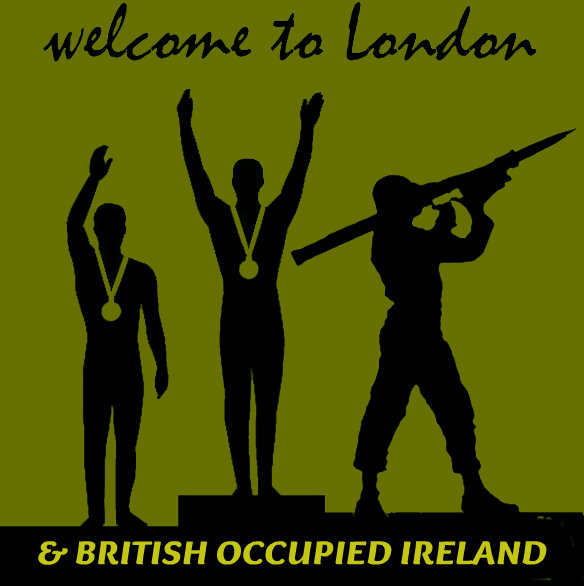
Olympic Games, Olympics, London 2012, London Olympics, Olympics London, MI5, blogger, YouTube, Video,


.jpg)


 Wednesday November 21, 2012 02:36
 by BrianClarkeNUJ - AllVoices



 By Jim Gibney (for Irish News)