
Ireland in song, dance, photographs, videos, stories, music, literature, much of it sourced in YouTube by BrianClarkeNUJ
Showing posts with label Due Process. Show all posts
Showing posts with label Due Process. Show all posts
Wednesday, September 11, 2013


Monday, September 2, 2013
POXYMORON PEACE PROCESS

Due process is the legal requirement that the state must respect all of the legal rights that are owed to a person. Due process balances the power of law of the land and protects the individual person from it. When a government harms a person without following the exact course of the law, this constitutes a due-process violation, which offends against the rule of law.
Due process has also been frequently interpreted as limiting laws and legal proceedings (see substantive due process), so that judges - instead of legislators - may define and guarantee fundamental fairness, justice, and liberty. This interpretation has proven controversial, and is analogous to the concepts of natural justice, and procedural justice used in various other jurisdictions. This interpretation of due process is sometimes expressed as a command that the government must not be unfair to the people or abuse them physically.
Due process is not used in contemporary English law, though two similar concepts are natural justice (which generally applies only to decisions of administrative agencies and some types of private bodies like trade unions) and the British constitutional concept of the rule of law as articulated by A. V. Dicey and others. However, neither concept lines up perfectly with the American theory of due process, which, as explained below, presently contains many implied rights not found in the ancient or modern concepts of due process in England.
Due process developed from clause 39 of the Magna Carta in England. When English and American law gradually diverged, due process was not upheld in England, but did become incorporated in the Constitution of the United States.
By jurisdiction
England
Magna Carta
In clause 39 of the Magna Carta, John of England promised as follows: "No free man shall be seized or imprisoned, or stripped of his rights or possessions, or outlawed or exiled, or deprived of his standing in any other way, nor will we proceed with force against him, or send others to do so, except by the lawful judgment of his equals or by the law of the land." Magna Carta itself immediately became part of the "law of the land", and Clause 61 of that charter authorized an elected body of twenty-five barons to determine by majority vote what redress the King must provide when the King offends "in any respect against any man." Thus, Magna Carta established the rule of law in England by not only requiring the monarchy to obey the law of the land, but also limiting how the monarchy could change the law of the land. It should be noted, however, that in the thirteenth century these provisions may have been referring only to the rights of landowners, and not to ordinary peasantry or villagers.
Shorter versions of Magna Carta were subsequently issued by British monarchs, and Clause 39 of Magna Carta was renumbered "29." The phrase due process of law first appeared in a statutory rendition of Magna Carta in A.D. 1354 during the reign of Edward III of England, as follows: "No man of what state or condition he be, shall be put out of his lands or tenements nor taken, nor disinherited, nor put to death, without he be brought to answer by due process of law."
In 1608, the English jurist Edward Coke wrote a treatise in which he discussed the meaning of Magna Carta. Coke explained that no man shall be deprived but by legem terrae, the law of the land, "that is, by the common law, statute law, or custom of England.... (that is, to speak it once and for all) by the due course, and process of law.."
Both the clause in Magna Carta and the later statute of 1354 were again explained in 1704 (during the reign of Queen Anne) by the Queen's Bench, in the case of Regina v. Paty. In that case, the House of Commons had deprived John Paty and certain other citizens of the right to vote in an election, and had committed them to Newgate Prison merely for the offense of pursuing a legal action in the courts. The Queen's Bench, in an opinion by Justice Powys,

Due process has also been frequently interpreted as limiting laws and legal proceedings (see substantive due process), so that judges - instead of legislators - may define and guarantee fundamental fairness, justice, and liberty. This interpretation has proven controversial, and is analogous to the concepts of natural justice, and procedural justice used in various other jurisdictions. This interpretation of due process is sometimes expressed as a command that the government must not be unfair to the people or abuse them physically.
Due process is not used in contemporary English law, though two similar concepts are natural justice (which generally applies only to decisions of administrative agencies and some types of private bodies like trade unions) and the British constitutional concept of the rule of law as articulated by A. V. Dicey and others. However, neither concept lines up perfectly with the American theory of due process, which, as explained below, presently contains many implied rights not found in the ancient or modern concepts of due process in England.
Due process developed from clause 39 of the Magna Carta in England. When English and American law gradually diverged, due process was not upheld in England, but did become incorporated in the Constitution of the United States.
By jurisdiction
England
Magna Carta
In clause 39 of the Magna Carta, John of England promised as follows: "No free man shall be seized or imprisoned, or stripped of his rights or possessions, or outlawed or exiled, or deprived of his standing in any other way, nor will we proceed with force against him, or send others to do so, except by the lawful judgment of his equals or by the law of the land." Magna Carta itself immediately became part of the "law of the land", and Clause 61 of that charter authorized an elected body of twenty-five barons to determine by majority vote what redress the King must provide when the King offends "in any respect against any man." Thus, Magna Carta established the rule of law in England by not only requiring the monarchy to obey the law of the land, but also limiting how the monarchy could change the law of the land. It should be noted, however, that in the thirteenth century these provisions may have been referring only to the rights of landowners, and not to ordinary peasantry or villagers.
Shorter versions of Magna Carta were subsequently issued by British monarchs, and Clause 39 of Magna Carta was renumbered "29." The phrase due process of law first appeared in a statutory rendition of Magna Carta in A.D. 1354 during the reign of Edward III of England, as follows: "No man of what state or condition he be, shall be put out of his lands or tenements nor taken, nor disinherited, nor put to death, without he be brought to answer by due process of law."
In 1608, the English jurist Edward Coke wrote a treatise in which he discussed the meaning of Magna Carta. Coke explained that no man shall be deprived but by legem terrae, the law of the land, "that is, by the common law, statute law, or custom of England.... (that is, to speak it once and for all) by the due course, and process of law.."
Both the clause in Magna Carta and the later statute of 1354 were again explained in 1704 (during the reign of Queen Anne) by the Queen's Bench, in the case of Regina v. Paty. In that case, the House of Commons had deprived John Paty and certain other citizens of the right to vote in an election, and had committed them to Newgate Prison merely for the offense of pursuing a legal action in the courts. The Queen's Bench, in an opinion by Justice Powys,
Tuesday, August 27, 2013

Thursday, August 15, 2013
PEACE PROCESS IRELAND DEVOID OF DUE PROCESS

The reason SF and FF split in the first place was the Constitutional issue. PSF surrendered on that matter, so there are now no actual ideological differences.While Martin McGuinness has called De Valera a traitor, for murdering IRA men, he also said Ireland could not be freed without armed struggle. We now have proof that McGuinness is a waffler like Gerry Adams, who says he was never in the IRA and with FF and PSF having 40% of the vote its highly likely that Britain's MI5 will have a major say after the next election and that a United Ireland will rejoin the British Commonwealth. Michael Martin is correct but like Adams he fogets to mention, it is first and foremost devoid of Justice, as in the instance of internment without trial.
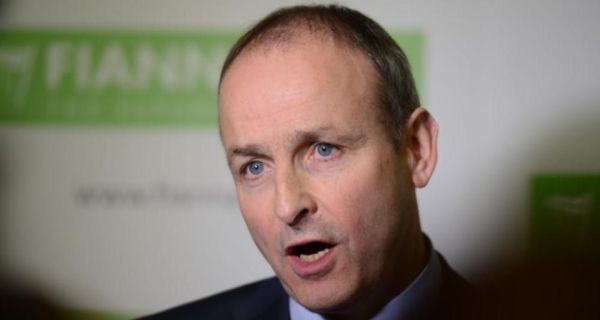
The Northern Ireland peace process is devoid of urgency and ambition and run by people who pander to their own constituencies and partisan concerns, Micheál Martin has said.
Opening the Merriman Summer School in Lisdoonvarna, Co Clare, last night, the Fianna Fáil leader said problems in Northern Ireland were being merely “managed” rather than “developed”.
“In some areas we are seeing a slow but undeniable retreat from a policy of deeper co-operation,” he said.
A majority in Northern Ireland felt the Stormont Assembly had achieved little, he said. In the Republic, people paid attention to Northern Ireland only when problems arose.
“There are only a handful of journalists who pay any attention to the wider cultural, social and economic dimensions of relations within Northern Ireland and between North and South,” he said.
“It is as if issues relating to the North have been put away in a file marked ‘history’ only to be dusted off when communal tensions flare up again.”
His address focused on the need for the opportunities provided by the Belfast Agreement to be pursued fully.
“The failure to take all of these opportunities, to build deep understanding of other communities, to aggressively target development, to work to being the concerns of marginalised groups and areas on to a shared agenda – each of these poses a long-term threat to what has been achieved,” he said.
The British-Irish element of the agreement was the most developed, he said, but North- South opportunities were being overlooked.Calling for a “reinvigorated north-south dimension”, he said work was needed to promote development which would show practical results for communities.
His singled out the failure to secure funding for the Narrow Water bridge spanning counties Louth and Down, and called for a range of all-Ireland economic initiatives including a Border Economic Zone.
UNITY: CLOSER THAN ANYONE THINKS
Moya St Leger argues that Irish citizens remain unprepared for unity. It is a slightly modified version of a piece featured in the Irish Democrat on 17 May 2007 Moya St Leger. Connolly Association president 2002-2008.
IRELAND COULD unite within ten years. All the indicators suggest as much. These include the steady demographic shift in the North; the assurance of Her Majesty's Government that Britain has "no selfish strategic or economic interest" in Northern Ireland; the pledge of both the Irish and British governments to support legislation to bring about a united Ireland if both parts of Ireland vote in favour of it, and the fact that political obstacles have been removed to this end.
Yet in the Irish Republic, at home, in the office, on the street, in bars and restaurants, in cabs and buses, not a word is said. Ninety years after the Easter rising - republicans excepted - a nation remains resolutely silent on the one historical imperative for which their forebears fought and died.
There is some talk of a united Ireland in the North but virtually none in the Republic. This has been noted by the Connolly Association. Since an end to partition is closer than it has ever been, in London we have been swapping our own theories on why so few in Ireland wish to comment.
In Dublin recently, a brilliant young film-maker was unequivocal in her view: "United Ireland? You can keep the north. We don't want those troublemakers," she said.
Understandable. Twenty-five years of bombing and shooting in the north caused people in the Republic to draw back in fright and distance themselves from their northern neighbours. Nationalism became associated with violence, so republicans were banned from radio and TV, and military parades at Easter abandoned.
Hostile media coverage of the IRA campaign mimicked the biased reporting in the British media. The representation of the IRA as a bunch of depraved criminals, whose thuggery bore no historical resemblance to the armed struggle of the 'old IRA', suited certain political elements in the Republic who were nervous of Sinn Fein's all-Ireland focus.
The unremitting anti-republicanism of the mainstream Irish media left no room for dispassionate political analysis and debate. The respectful stance of successive Irish governments vis-à-vis Britain persuaded the Irish that any talk of a united Ireland was tantamount to siding with terrorists.
People were led to believe there was a moral gulf between the 'old IRA' who fought in the war of independence and the Provos, as if a fundamentally different moral standard could be applied to the Soloheadbeg ambush of the RIC in 1919 and the mortar attack on the Newry RUC police station in 1979.
This schizophrenic attitude became the default mindset of the majority. It led to reluctance in the south to acknowledge the north as part of a country with shared ancient Irish roots present before the colonial period. A casualty of this disconnection is the younger generation, who grew up with no strong feelings about the border.
Another young Dubliner, an IT consultant, summed it up. "The north isn't our concern. Let the politicians get on with whatever they're doing, we've got better things to do with our time". He admitted to having little interest in Irish history. The tales of a handful of over-nineties reminiscing about the 1920s in country snugs never reached the ears of the Celtic Tiger generation hanging out in their trendy bars in the cities.
Now the Celtic Tiger is dead and the Irish of the Republic have seen their dreams shattered by having blindly nailed the Irish tricolour to the EU mast, Sinn Fein is increasing its TDs in the Dail, and Gerry Adams TD gaining influence in the Republic with his relentless unification campaign. Adams has clearly seen that relying on the Good Friday Agreement to produce constitutional change is not enough.
The under-forties in the Republic cannot empathize with the powerful emotions and zeal which fuelled the war of independence and the civil war. Never having experienced British hegemony, they see no point in challenging the status of the north, even less in discussing it.
Undeterred by the nation's waning interest, Albert Reynolds an astute businessman turned politician, who had never let the border impede his commercial activities, decided the conflict had to end.
By entering into talks with British Prime Minister John Major, the Taoiseach risked his political career in an effort "to overcome the legacy of history and to heal the divisions".
The seismic movement of the political ground triggered by the Reynolds-Major talks resulted in the Downing Street Declaration of 1993. Five years later, the multi-party Good Friday agreement received the consent of 94.39 per cent in the Republic.
Some Protestants in Northern Ireland's business community already locked into the global economy are wondering whether unification would be such a bad thing after all - provided they can keep their British passports!
The grindingly slow process agreed by the British and Irish governments of creating a stable Northern Ireland should not impede a nationwide debate in the whole of Ireland about the country's future. Adams is right to encourage that debate. He of all people knows the British will not discourage it because a national debate within the whole of Ireland accords with the unstated British long view that ultimately sovereignty of the north will have to be surrendered for chiefly economic reasons.
The state visit of the Queen to Ireland in 2011 was no courtesy visit. It signified the Crown's formal acknowledgement of the Irish Republic. One day a British monarch will be signing an Act of Parliament ceding the six remaining northern counties to the Republic. The royal visit of 2011 laid the necessary foundation for that Act of Parliament.
Preparing the ground for a united Ireland is laborious and takes time. The constitutional issues are relatively straightforward, but it is not premature for the Irish people north and south to start talking about the daunting practicalities of unification and, crucially, who will fund it.
Accommodating six extra counties will pose a huge challenge for the Republic's institutions and the British civil servants eventually tasked with cooperation in the process. Public discussion is needed in Ireland on how to tackle uniting the administration, the judiciary, education and local government.
The merging of health care facilities and transport infrastructure, not to mention the replacement of sterling with the Euro (if it still exists) and all that entails, require meticulous forward planning. A national debate requires the input of ideas from professionals in all fields. Germany is still working on overcoming the epic obstacles of its unification 24 years later. It is an ongoing process.
A divided Ireland has not been written in stone and acting as if devolution is the end of the road, while being a diplomatic stance to adopt vis-a-vis. unionists, will not stem the inexorable tide of history.
IRELAND COULD unite within ten years. All the indicators suggest as much. These include the steady demographic shift in the North; the assurance of Her Majesty's Government that Britain has "no selfish strategic or economic interest" in Northern Ireland; the pledge of both the Irish and British governments to support legislation to bring about a united Ireland if both parts of Ireland vote in favour of it, and the fact that political obstacles have been removed to this end.
Yet in the Irish Republic, at home, in the office, on the street, in bars and restaurants, in cabs and buses, not a word is said. Ninety years after the Easter rising - republicans excepted - a nation remains resolutely silent on the one historical imperative for which their forebears fought and died.
There is some talk of a united Ireland in the North but virtually none in the Republic. This has been noted by the Connolly Association. Since an end to partition is closer than it has ever been, in London we have been swapping our own theories on why so few in Ireland wish to comment.
In Dublin recently, a brilliant young film-maker was unequivocal in her view: "United Ireland? You can keep the north. We don't want those troublemakers," she said.
Understandable. Twenty-five years of bombing and shooting in the north caused people in the Republic to draw back in fright and distance themselves from their northern neighbours. Nationalism became associated with violence, so republicans were banned from radio and TV, and military parades at Easter abandoned.
Hostile media coverage of the IRA campaign mimicked the biased reporting in the British media. The representation of the IRA as a bunch of depraved criminals, whose thuggery bore no historical resemblance to the armed struggle of the 'old IRA', suited certain political elements in the Republic who were nervous of Sinn Fein's all-Ireland focus.
The unremitting anti-republicanism of the mainstream Irish media left no room for dispassionate political analysis and debate. The respectful stance of successive Irish governments vis-à-vis Britain persuaded the Irish that any talk of a united Ireland was tantamount to siding with terrorists.
People were led to believe there was a moral gulf between the 'old IRA' who fought in the war of independence and the Provos, as if a fundamentally different moral standard could be applied to the Soloheadbeg ambush of the RIC in 1919 and the mortar attack on the Newry RUC police station in 1979.
This schizophrenic attitude became the default mindset of the majority. It led to reluctance in the south to acknowledge the north as part of a country with shared ancient Irish roots present before the colonial period. A casualty of this disconnection is the younger generation, who grew up with no strong feelings about the border.
Another young Dubliner, an IT consultant, summed it up. "The north isn't our concern. Let the politicians get on with whatever they're doing, we've got better things to do with our time". He admitted to having little interest in Irish history. The tales of a handful of over-nineties reminiscing about the 1920s in country snugs never reached the ears of the Celtic Tiger generation hanging out in their trendy bars in the cities.
Now the Celtic Tiger is dead and the Irish of the Republic have seen their dreams shattered by having blindly nailed the Irish tricolour to the EU mast, Sinn Fein is increasing its TDs in the Dail, and Gerry Adams TD gaining influence in the Republic with his relentless unification campaign. Adams has clearly seen that relying on the Good Friday Agreement to produce constitutional change is not enough.
The under-forties in the Republic cannot empathize with the powerful emotions and zeal which fuelled the war of independence and the civil war. Never having experienced British hegemony, they see no point in challenging the status of the north, even less in discussing it.
Undeterred by the nation's waning interest, Albert Reynolds an astute businessman turned politician, who had never let the border impede his commercial activities, decided the conflict had to end.
By entering into talks with British Prime Minister John Major, the Taoiseach risked his political career in an effort "to overcome the legacy of history and to heal the divisions".
The seismic movement of the political ground triggered by the Reynolds-Major talks resulted in the Downing Street Declaration of 1993. Five years later, the multi-party Good Friday agreement received the consent of 94.39 per cent in the Republic.
Some Protestants in Northern Ireland's business community already locked into the global economy are wondering whether unification would be such a bad thing after all - provided they can keep their British passports!
The grindingly slow process agreed by the British and Irish governments of creating a stable Northern Ireland should not impede a nationwide debate in the whole of Ireland about the country's future. Adams is right to encourage that debate. He of all people knows the British will not discourage it because a national debate within the whole of Ireland accords with the unstated British long view that ultimately sovereignty of the north will have to be surrendered for chiefly economic reasons.
The state visit of the Queen to Ireland in 2011 was no courtesy visit. It signified the Crown's formal acknowledgement of the Irish Republic. One day a British monarch will be signing an Act of Parliament ceding the six remaining northern counties to the Republic. The royal visit of 2011 laid the necessary foundation for that Act of Parliament.
Preparing the ground for a united Ireland is laborious and takes time. The constitutional issues are relatively straightforward, but it is not premature for the Irish people north and south to start talking about the daunting practicalities of unification and, crucially, who will fund it.
Accommodating six extra counties will pose a huge challenge for the Republic's institutions and the British civil servants eventually tasked with cooperation in the process. Public discussion is needed in Ireland on how to tackle uniting the administration, the judiciary, education and local government.
The merging of health care facilities and transport infrastructure, not to mention the replacement of sterling with the Euro (if it still exists) and all that entails, require meticulous forward planning. A national debate requires the input of ideas from professionals in all fields. Germany is still working on overcoming the epic obstacles of its unification 24 years later. It is an ongoing process.
A divided Ireland has not been written in stone and acting as if devolution is the end of the road, while being a diplomatic stance to adopt vis-a-vis. unionists, will not stem the inexorable tide of history.
Tuesday, April 23, 2013
POXYMORON PEACE PROCESS MINUS DUE PROCESS

The British Tories who have reneged on most details of the Irish Peace Process have also ignored calls by the partly Unionist, Alliance party in their own Parliament, on British Tory policies of internment without trial in British occupied Ireland.
Sinn Fein leaders have consistently stated that the Tories since their election have detached from the Peace Process a diplomatic description of the Tories, reneging on British commitments made in the Belfast Agreement, to end the latest episode of forty years of war by the British in Ireland. They still however, as part of the one party regime in Stormont administer internment without trial, post peace process.
Commitments were signed by the previous Labour Government in Britain, to try to bring peace in Ireland, have been reneged on.. The Tory government since their election have destroyed practically all of the Agreement and tried to provoke another war with re-introducing internment without trial which was the spark, that created the previous forty years of war on the Irish people.
Because of commitments made to their their financial election sponsors, of the British industrial arms complex, to promote arms sales, their return to war in British Occupied Ireland, is the perfect shop window to the world, particularly on their BBC world service news reports, of British evolving armaments of repression and British state terrorism, being used in their counter insurgency test laboratory of British Occupied Ireland.
The political internment without trial, of the iconic 59 year old, FORMER Irish resistance fighterS Marian Price and veterans like Martin Corey an old age pensioner, long retired from politics, is the most perfect way possible according to aTory Think Tank, to re-start the British war on ireland.
" INTERNMENT – Indefinte detention without charge or trial – is not confined to Ireland. Virtually all countries, from the most overtly totalitarian to the most 'liberal' social democracies have on their statute books repressive laws to be used in any 'emergency' – that is when the ruling regime is threatened from below. In Ireland, however, that 'emergency' has been going on for almost 100 years.
This book is only concerned with internment in Ireland, North and south, from 1916 to the present day. The author shows how internment has been used as a political weapon, how it has succeeded in the past and how in the long run it has been a majot factor in the downfall of Stormont, the parliament of Northern Ireland.
But most of all this is the story of the internees, working-class men and women who have suffered and, in some cases, died for their beliefs. They are neither heroes nor villains, although many have shown great bravery and heroism and some have been guilty of cowardice. In this book they tell for the first time what it is reallly like to be interned. They are not well-known public figures, politicians or publicists. They are ordinary men and women who have suffered for their ideals an dwho remind the readers that the 'knock on the door' could be heard by them too. For those peace-loving citizens who unreservedly support the forces of 'law and order' this book reminds them of the old caveat: Quis custodes custodiet? Who will guard the guards?
Parts of this book, particulary those dealing with torture and brutality, do not make pleasant reading. But then we do not live in pleasant times.
LINK:
‘Internment’ by John McGuffin (1973)
The Knock on the Door
In many a time, in many a land,
With many a gun in many a hand,
They came by the night, they came by the day,
They came with their guns to take us away,
With their knock on the door, knock on the door,
Here they come to take one more.
With many a gun in many a hand,
They came by the night, they came by the day,
They came with their guns to take us away,
With their knock on the door, knock on the door,
Here they come to take one more.
Look over the oceans, look over the lands,
Look over the leaders with blood on their hands,
And open your eyes and see what they do,
When they knock over there friend, they're knocking for you,
With their knock on the door, knock on the door,
Here they come to take one more.
'They can jail the revolutionary
but not the revolution'
— CHE GUEVARA.
Look over the leaders with blood on their hands,
And open your eyes and see what they do,
When they knock over there friend, they're knocking for you,
With their knock on the door, knock on the door,
Here they come to take one more.
'They can jail the revolutionary
but not the revolution'
— CHE GUEVARA.
Tuesday, August 28, 2012
Irish Peace Process Without Due Process is an English Oxymoron
Irish Peace Process Without Due Process is an English Oxymoron
 international | rights and freedoms | opinion/analysis
  Tuesday August 28, 2012 10:28
 by BrianClarkeNUJ - AllVoices
Ghengis Paterson
It is becoming more transparent, with each passing day, that the British Tory Government is working relentlessly to dismantle the Irish peace process and escape responsibility for decades of war crimes in Ireland including murder, corruption and human rights violations.Reports submitted by the Committee on the Administration of Justice, Relatives for Justice, British-Irish Rights Watch recently submitted to Congressmen Chris Smith and Senator Ben Cardin, Co-Chairs of the Committee on Security and Cooperation in Europe read like a Nazi war crime file.
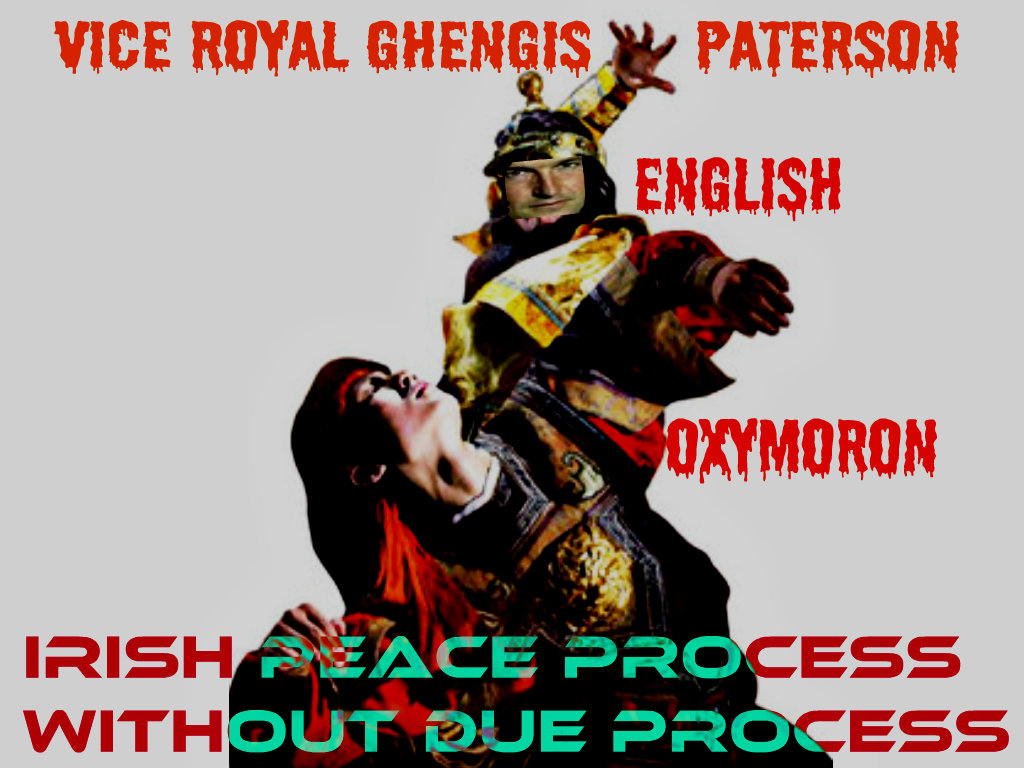
In their bullying arrogance and rank hypocrisy, the UK criticizes China for its persecution and record on human rights, while they threaten invasion of an Embassy and torture political prisoners interned without trial in Ireland such as Marian Price, while they have also admitted, colluding in the murder of Irish human rights attorney Patrick Finucane, because he knew too much about their dirty laundry in British Occupied Ireland. While this collusion came as a surprise to Congressman Speaker Boehner in the States and minority Leader Nancy Pelosi, it certainly came as no surprise to the long persecuted Irish.
Many believe their bullying arrogance displayed with their imperial dismissal of the Irish government's request for British Army documents, relating to the act of greatest slaughter of the current conflict, the no-warning car bombing of Dublin & Monaghan, is calculated to break the peace process in Ireland once and for all. Every dog on an Irish street knows, that the cars involved in delivering the bombs, were primed by British Army members and handlers. Their consistent meddling in the affairs of another country, something they always complain about with others, while the world objected to their brutal massacre of the civil rights movement in Derry, their corruption of their own supposed rule of law, their re-introduction of internment without trial, their continued use of torture, despite promises to the contrary after guilty verdicts at the Court of Human Rights in Europe, their rampant media censorship or all things genuinely Irish, their destruction of democracy with ongoing political assassinations.
The ongoing internment without trial of Marian Price exemplifies their efforts to provoke a violent reaction from the Irish and finally end the peace process, in an example of their determination to end the agreement. Marian a 58 year old political activist, should be released from internment without trial in British Occupied Ireland immediately, because rather than being 'on licence' she was given a full royal pardon or the Royal Prerogative of Mercy. Vice Royal Paterson's claims that this document, which would set Marian free, has been lost or shredded.
Patrick Ramsey, a Social Democratic Labour member of the elected British Assembly recently wrote to Paterson about this "lost" pardon and formally asked;
-- Where would Mrs. Price-McGlinchey's pardon have been held?
-- How many staff are currently seeking the document and in what departments?
-- Are those looking for it doing so on a full-time basis, if not, why not?
-- Has the Northern Ireland Office received comment from the judiciary on the apparent loss of the document?
-- How many Royal Prerogative's have been lost (or destroyed) that the government has record of?
-- Who is ultimately responsible for the care and maintenance of the building where these documents are kept?
-- What communication [has Paterson] personally had with this person/Department?
-- Can [Paterson] confirm the Department is still seeking the document and will do so until it is found?
The Unelected English Paterson in Ireland contemptuously dismissed the elected Irish Assembly members Ramsey's inquiry stating that "unfortunately the Royal Prerogative of Mercy was not recovered but has no bearing on current circumstances."
Vice royal Paterson has placed himself above the British Occupied Ireland Assembly, which was supposedly elected to govern British Occupied Ireland, just as he has previously overruled the judiciary. Two judges previously ruled that Marian Price should be released on bail and was no danger to society, both having seen precisely the same intelligence reports as Paterson. Each time Vice Royal Paterson negated the judge's decisions and ordered Marian Price interned without trial in solitary confinement sensory deprivation torture, for which Britain promised to cease, when previously found guilty of the same torture by the European Court of Human Rights in Strasbourg. The bigot Paterson, a sadistic blood sport enthusiast, is vindictively determined to keep Marian Price locked up, to keep his sectarian fox hunting loyalist friends happy and ensure the ongoing sadistic damage to her health, while the behavior of the sectarian prison regime is ongoing and deliberately torturing Marian daily.
There is big money involved and considerable political capital for the new Tory regime. British Occupied Ireland has for several decades now served as both a research laboratory and a conflict theatre, to showcase to prospective buyers and their Commonwealth neo-colonial Governments, the evolved crowd control equipment and Kitsonian tactics, developed over 40 years in their latest phase of British repression in Ireland.The peace process is also undermining the justification of hugely bloated taxpayer securocrat budgets of billions in their secret service gestapo establishment, aptly named Hollywood in British Occupied Ireland the centre that compiles secret service reports like movie scripts of pure fiction, that intern without trial for life, Irish prisoners of political conscience, like Marian price.
This Hollywood home of the faceless secret service gestapo, along with the Industrial war complex spending billions of taxpayers money, are about the only thriving British industry left, while they continue with a vested interest in compiling secret intelligence reports, that are never made public or can be refuted by the interned without trial. How can these scripts be regarded as impartial or part of any sort of impartial fair process?. There is big money in repression, internment without trial and torture for the Tories. There is much power too, in that their campaign coffers get bigger contributions from the arms industry, to promote wars abroad and continue to provoke the Irish to break the peace process nearer home.
Vice royal Paterson, the Shropshire leather businessman who married into royalty and the high society horsey set, knows this very well, from his lucrative career expereince in the Tory party.The gravy train pretence of democracy, has being expanded to include some recent Irish recruits to Stormont too, the boasted sectarian parliament for a sectarian people. In the instances of the British gravy that recruited Lord Muck of Londonderry to Stormont not being sufficient, a spot of blackmail on the enablers of child rape in both DUP and PSF circles doing the trick.
Meanwhile the long suffering impoverished working class nationalist people, the institutionalized, victims of British sponsored sectarianism from which Marian Price comes, still struggle for freedom. The slow moving gravy train has clearly not delivered the promised Bill of Rights or basics of justice, necessary for long term peace in this sectarian scum state, the product of age old imperial divide and conquer tactics, they still sponsor in British Occupied Ireland. The injustice of the internment of Marian Price is a good starting point for anyone remotely concerned with peace and justice in Ireland, both critically interdependent. A Peace Process without Due Process is clearly an english oxymoron.
Many believe their bullying arrogance displayed with their imperial dismissal of the Irish government's request for British Army documents, relating to the act of greatest slaughter of the current conflict, the no-warning car bombing of Dublin & Monaghan, is calculated to break the peace process in Ireland once and for all. Every dog on an Irish street knows, that the cars involved in delivering the bombs, were primed by British Army members and handlers. Their consistent meddling in the affairs of another country, something they always complain about with others, while the world objected to their brutal massacre of the civil rights movement in Derry, their corruption of their own supposed rule of law, their re-introduction of internment without trial, their continued use of torture, despite promises to the contrary after guilty verdicts at the Court of Human Rights in Europe, their rampant media censorship or all things genuinely Irish, their destruction of democracy with ongoing political assassinations.
The ongoing internment without trial of Marian Price exemplifies their efforts to provoke a violent reaction from the Irish and finally end the peace process, in an example of their determination to end the agreement. Marian a 58 year old political activist, should be released from internment without trial in British Occupied Ireland immediately, because rather than being 'on licence' she was given a full royal pardon or the Royal Prerogative of Mercy. Vice Royal Paterson's claims that this document, which would set Marian free, has been lost or shredded.
Patrick Ramsey, a Social Democratic Labour member of the elected British Assembly recently wrote to Paterson about this "lost" pardon and formally asked;
-- Where would Mrs. Price-McGlinchey's pardon have been held?
-- How many staff are currently seeking the document and in what departments?
-- Are those looking for it doing so on a full-time basis, if not, why not?
-- Has the Northern Ireland Office received comment from the judiciary on the apparent loss of the document?
-- How many Royal Prerogative's have been lost (or destroyed) that the government has record of?
-- Who is ultimately responsible for the care and maintenance of the building where these documents are kept?
-- What communication [has Paterson] personally had with this person/Department?
-- Can [Paterson] confirm the Department is still seeking the document and will do so until it is found?
The Unelected English Paterson in Ireland contemptuously dismissed the elected Irish Assembly members Ramsey's inquiry stating that "unfortunately the Royal Prerogative of Mercy was not recovered but has no bearing on current circumstances."
Vice royal Paterson has placed himself above the British Occupied Ireland Assembly, which was supposedly elected to govern British Occupied Ireland, just as he has previously overruled the judiciary. Two judges previously ruled that Marian Price should be released on bail and was no danger to society, both having seen precisely the same intelligence reports as Paterson. Each time Vice Royal Paterson negated the judge's decisions and ordered Marian Price interned without trial in solitary confinement sensory deprivation torture, for which Britain promised to cease, when previously found guilty of the same torture by the European Court of Human Rights in Strasbourg. The bigot Paterson, a sadistic blood sport enthusiast, is vindictively determined to keep Marian Price locked up, to keep his sectarian fox hunting loyalist friends happy and ensure the ongoing sadistic damage to her health, while the behavior of the sectarian prison regime is ongoing and deliberately torturing Marian daily.
There is big money involved and considerable political capital for the new Tory regime. British Occupied Ireland has for several decades now served as both a research laboratory and a conflict theatre, to showcase to prospective buyers and their Commonwealth neo-colonial Governments, the evolved crowd control equipment and Kitsonian tactics, developed over 40 years in their latest phase of British repression in Ireland.The peace process is also undermining the justification of hugely bloated taxpayer securocrat budgets of billions in their secret service gestapo establishment, aptly named Hollywood in British Occupied Ireland the centre that compiles secret service reports like movie scripts of pure fiction, that intern without trial for life, Irish prisoners of political conscience, like Marian price.
This Hollywood home of the faceless secret service gestapo, along with the Industrial war complex spending billions of taxpayers money, are about the only thriving British industry left, while they continue with a vested interest in compiling secret intelligence reports, that are never made public or can be refuted by the interned without trial. How can these scripts be regarded as impartial or part of any sort of impartial fair process?. There is big money in repression, internment without trial and torture for the Tories. There is much power too, in that their campaign coffers get bigger contributions from the arms industry, to promote wars abroad and continue to provoke the Irish to break the peace process nearer home.
Vice royal Paterson, the Shropshire leather businessman who married into royalty and the high society horsey set, knows this very well, from his lucrative career expereince in the Tory party.The gravy train pretence of democracy, has being expanded to include some recent Irish recruits to Stormont too, the boasted sectarian parliament for a sectarian people. In the instances of the British gravy that recruited Lord Muck of Londonderry to Stormont not being sufficient, a spot of blackmail on the enablers of child rape in both DUP and PSF circles doing the trick.
Meanwhile the long suffering impoverished working class nationalist people, the institutionalized, victims of British sponsored sectarianism from which Marian Price comes, still struggle for freedom. The slow moving gravy train has clearly not delivered the promised Bill of Rights or basics of justice, necessary for long term peace in this sectarian scum state, the product of age old imperial divide and conquer tactics, they still sponsor in British Occupied Ireland. The injustice of the internment of Marian Price is a good starting point for anyone remotely concerned with peace and justice in Ireland, both critically interdependent. A Peace Process without Due Process is clearly an english oxymoron.
Tuesday, April 17, 2012
Peace Process Without Due Process
Peace Process Without Due Process
international | rights and freedoms | opinion/analysis Monday April 16, 2012 23:17 by BrianClarkeNUJ - AllVoices
John McGuffin an Ulster Anarchist
John McGuffin an Ulster anarchist was cremated 10 years ago on this coming May Day in Belfast. I met John in London almost 40 years ago, when we got drunk together.John was the sole anarchist of the People's Democracy movement of the late sixties and carried alone an anarchist banner on the infamous Burntollet part of the civil rights march which was viciously attacked by Loyalists in and out of uniform. He was interned in 1971, writing a book later, about his experience and about internment in Ireland, followed by another book called 'The Guineapigs', about the torture of political internees of that time
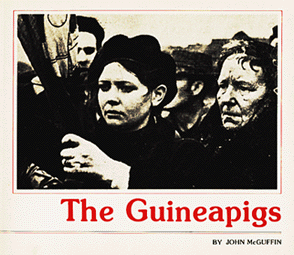
John McGuffin and Ulster anarchist was cremated 10 years ago on this coming May Day in Belfast. I met John in London almost 40 years ago, when we got drunk together.John was the sole anarchist of the People's Democracy movement of the late sixties and carried alone an anarchist banner on the infamous Burntollet part of the civil rights march which was viciously attacked by Loyalists in and out of uniform. He was interned in 1971, writing a book later, about his experience and about internment in Ireland, followed by another book called 'The Guineapigs', about the torture of political internees of that time
John was from a Protestant background, who never met a Catholic until he was 18. He had however many libertarians friends from Germany and came from a very political family. His coffin was draped in the anarchist red and black flag or the "Up Down flag" as he called it ! John was contrary and being true to himself not always easy to get along with. I first met John at a Trotskyist get together in London, where he was a respected activist.
His latter book, "The Guineapigs" was about fourteen Irish political prisoners, with whom the British experimented with sensory deprivation torture in 1971. With the return of political Internment without trial this form of torture is still continued particularly with Marian Price held for a year in solitary confinement. Their 'techniques' which were outlawed after Britain was convicted at the International Court of Human Rights at Strasbourg. Britain exported the techniques to its neo-colonies and its commonwealth worldwide. His book published in 1974 was sold out on his first run but was taken off the shelf and censored by the British Government as is today's internment.
Modern torture techniques such as 'Sensory Deprivation' is still being perfected by the British on guineapigs like Marian Price and her comrades for future use against civilians. John McGuffin being an ex-internee himself also spent two years researching the book, where he named the torturers. None of the British Army or RUC were ever convicted of torture or brutality, despite the fact that the British were forced to pay out more than $5 million in compensation to victims of torture.
In his earlier book called 'Internment' in Chapter 7 he wrote:
"THE POLITICS OF INTERNMENT 1971
In the mid-1960's people might have been forgiven for thinking that internment was a thing of the past. (True, the obnoxious Special Powers Acts were still on the Statute Book, but they were in abeyance). Such thinking was not to be right, however. The monolithic structure of Unionism proved incapable of reforming itself under the onslaught of the civil rights campaign. Terence O'Neill might have been able to save the Unionists with his pragmatic approach and his appreciation of the need for change, but their diehard 'not an inch'
backwoodsmen would have none of it. And so the week of 12 - 16 August 1969 saw the old familiar pattern: a police force unable, and, in many cases unwilling,[1] to prevent the sectarian attack upon the Falls Road periphery, led in some cases by the B specials. That month was to see house burning, intimidation and murder — ten civilians dead, including a 9-year-old boy asleep in his bed, shot by a high-velocity Browning machine-gun used with murderous recklessness by the police in their Shorland armoured cars; 145 injured, hundreds of families burnt out of their homes, 90% of them Catholic. Free Derry was born that week. The barricades went up in Belfast. The first steps towards the irrevocable demise of Stormont were taken. And, predictably, men were detained, without charge or trial....."
"But the Unionist hierarchy learn nothing from history. The gangling figure of Chichester Clark, the stand-in PM, shambled off into obscurity as 1970 and 1971 saw an escalation of the violence by the Provisional IRA, themselves a reaction to the attempted 'Loyalist' pogrom of 1969.
On 23 March 1971 Brian Arthur Deane Faulkner achieved his lifelong ambition and became PM. The English press warned that he was the 'last man in'. If he couldn't control the situation, direct rule was a certainty. But despite the obvious immensity of the task, Faulkner was confident.
This was the moment for which he had schemed, intrigued and betrayed, for so long. With a staggering record of disloyalty to previous PMs, he could hardly expect to be trusted or liked, but surely all could agree on his shrewdness and ability.
In fact, Faulkner's intelligence was always greatly over-rated by the media. And his biggest mistake was soon to come. The Sunday Times 'Insight' team claim[2] that "when he took over the issue was not whether internment was to come, but when and on what scale. By then Faulkner had been an advocate of internment inside Chichester Clark's Joint Security Committee, for six months." Whether this is true or not, and on balance it seems a reasonable statement, it is certain that Faulkner had completely failed to learn the lesson of how and when internment 'worked'. He had been Minister for Home Affairs in 1959 under Brookeborough, and, with the help of his trusty aide, the civil servant William Stout, he had been responsible for the implementation of internment, which he apparently felt to be responsible for the defeat of the IRA border campaign. As is made clear already, this just was not so......"
Forty years later in 2012 who would have thought, we would have "Internment" again or a 'Peace Process' without Due Process ! The withdrawal of the SDLP from Stormont was the response of the only Nationalist opposition last time the other sadistic fox hunter Brian Faulkner introduced internment and they established an "Alternative Assembly" in Strabane. Oppostion is still not tolerated within Stormont or without, these days by the unelected Englishman in Ireland Paterson but yet again the SDLP are the only real voices of clarity and passion there, opposing the internment of Marian Price and the jailing of all genuine opponents of British Occupation in Ireland.
Peace and democracy are still the few Brit buzz words not censored but a cursory examination shows that at best they are a satire. Indeed Her Majesty's unelected Paterson with his army of secret service puppet masters at Hollywood, along with his fellow English RUC man Baggot, will not tolerate any Irish opposition to their Irish occupation. Indeed he also employs certain Provo leaders who are well greased, as storm troopers and censors with their bastardized Voltaire version of a dishonourable peace.
In 1971 Faulkner offered in Stormont to the SDLP a degree of power-sharing. The SDLP have clearly said they were obliged in principle to leave Stormont because Foxhunter Faulkner introduced internment without trial as has his despotic horsey successor. The SDLP curiously are the only party to challenge MI5's along with Paterson and Baggot's absolute control of Stormont who to derive their authority from Her Majesty not mere commoners. However the two Englishmen have presided over the disappearance of Her Majesty's documentation in the instance of Marian Price which is further perverting the course of justice or more appropriately injustice, on the matter. This constitutes criminality carrying a life sentence for non nobility such as commoners. Further, be it Queen's English or plain English they both should be charged with kidnap be they citizens, commoners or the protected species of horsey Tory blood hunters in Occupied Ireland.
Subscribe to:
Posts (Atom)