Showing posts with label Concentration Camp. Show all posts

Monday, November 11, 2013

CONCENTRATION CAMPS CREATION BRITAIN


Concentration Camp a British Invention


Concentration Camp a British Invention


The British, Ethnic Cleansing and Concentration Camps
By Dr. Gary K. Busch 11/11/08 Isee British Battles site
Nov 12, 2008 - 12:34:31 PM


The world is full of commentaries on the term”ethnic cleansing”; the isolation, removal and disposal of one ethnic group by another. There are many demands for one group or another to be sent for trial for ‘crimes against humanity” in The Hague. The Balkan Wars saw massive efforts of ‘cleansing’ by Serbs against Croats; Serbs against Bosnian Muslims; Croats against Serbs; etc. The current clashes in Darfur illustrate the continuation of the practice. It is seen as a horrific and barbaric practice undertaken by villains and war criminals. Indeed, the International Tribunal in The Hague has been busy prosecuting various leaders of the failed Yugoslavia; Liberia, Sierra Leone and the Democratic Republic of the Congo for their egregious acts of ethnic cleansing.

An analogous practice was perfected by the Nazis throughout the European theatre and the Japanese in their Greater East Asian Co-Prosperity Scheme where captive populations and those who had been ‘ethnically cleansed’ were herded into concentration camps which were isolated from the surrounding communities. In these camps the prisoners were mistreated; deprived of food, rights and their lives in a policy of isolation and gross brutality. The Nuremburg Trials had this theme as its leitmotif as did the trials of Japanese War Criminals.

However, the origin of the system of concentration camps was not a German or a Japanese invention. The origin of the system of ethnic cleansing was not invented in Yugoslavia or West and Central Africa. The modern, institutionalised system of ethnic cleansing and concentration camps was a British invention. At the turn of the Twentieth Century the British embarked upon the second Anglo-Boer War (1889-1902). This war was almost inevitable after the Afrikaners, who had been driven north after the First Boer War (1880-81) discovered gold at Witwatersrand in the Transvaal, a territory the British had given them. The British, especially the newly chartered British South Africa Company of Cecil John Rhodes, wanted a share of the gold and wanted to control the mines. Additionally, the British felt gold would make the Afrikaners wealthy and with their potential German allies they could threaten other British territories in southern Africa.

At the start of hostilities the Afrikaners had more troops available, could live off the land; and had a better grasp of how African Wars were fought. The Boer War was a serious jolt for the British Army. At the outbreak of the war British tactics were appropriate for the use of single shot firearms, fired in volleys controlled by company and battalion officers; the troops fighting in close order. The need for tight formations had been emphasised time and again in colonial fighting. In the Zulu and Sudan Wars overwhelming enemy numbers armed principally with stabbing weapons were easily kept at a distance by such tactics; but, as at Isandlwana, would overrun a loosely formed force. These tactics had to be entirely rethought in battle against the Boers armed with modern weapons. These were not colonials or native soldiers.

In the months before hostilities the Boer commandant general, General Joubert, bought 30,000 Mauser magazine rifles and a number of modern field guns and automatic weapons from the German armaments manufacturer Krupp and the French firm Creusot. The commandoes, without formal discipline, welded into a fighting force through a strong sense of community and dislike for the British. Field Cornets led burghers by personal influence not through any military code. The Boers did not adopt military formation in battle, instinctively fighting from whatever cover there might be. The preponderance was countrymen, running their farms from the back of a pony with a rifle in one hand. These rural Boers brought a lifetime of marksmanship to the war, an important edge, further exploited by Joubert’s consignment of magazine rifles. With strong field craft skills and high mobility the Boers were natural mounted infantry. The urban burghers and foreign volunteers readily adopted the fighting methods of the rest of the army.

Other than in the regular uniformed Staats Artillery and police units, the Boers wore their every day civilian clothes on campaign. However, the pressure of constant conflict reduced the Boer numbers. After the first month the Boers lost their numerical superiority, spending the rest of the formal war on the defensive against British forces that regularly outnumbered them.

British tactics, little changed from the Crimea, were incapable of winning battles against entrenched troops armed with modern magazine rifles. Every British commander made the same mistake; Buller; Methuen, Roberts and Kitchener. When General Kelly-Kenny attempted to winkle Cronje’s commandoes out of their riverside entrenchments at Paardeburg using his artillery, Kitchener intervened and insisted on a battle of infantry assaults; with the same disastrous consequences as Colenso, Modder River, Magersfontein and Spion Kop.

By early 1900 the Afrikaners had beaten the British on four battles and had Ladysmith, Kimberley and Mafeking under siege. A new British command under Roberts and his chief of staff Kitchener decided on a new strategy. They agreed to apply a scorched earth policy so that the Boers and local people had no cover and no food. They burnt down Boer farms; they stole or destroyed their livestock; and they took their women and children as hostages. They herded these into concentration camps. The British set up some 50 concentration camps. These were appalling places with no food, medicine or basic hygiene. More than 26,000 women and children died in these camps.

The British set up concentration camps and applied a scorched earth policy because they couldn't cope with guerrilla warfare. Yet, the British public were kept uninformed of this humanitarian tragedy. British newspapers were full of acres of photographs of successful British troops and those from other parts of the Empire, acting heroically... The spin was as elegant as it is today. The public's whole mindset was tempered with the invincible imperial image. When Mafeking was relieved and the war turned the British way, Salisbury was able to go the country in October 1900 and win another term of government for the Conservatives - they called it the Khaki Election (’khaki’ being the name given to the British troops.)

It wasn’t just Boers who were kept in concentration camps. Black South Africans were held in even worse conditions by the British. Removed from farms or other areas, at least 14 000 Black people are believed to have died in these concentration camps--but for nearly a century the ordinary South African was completely unaware of their existence. Unlike the Boer prison camps, the Black prisoners were mostly left to fend for themselves, and were not given any rations at all. They were expected to grow food or find work. In a few instances this actually improved their chances of survival because they were able to get out of the camps which were hellholes of infection and disease.


As Boer farms were destroyed by the British under their "Scorched Earth" policy - including the systematic destruction of crops and slaughtering of livestock, the burning down of homesteads and farms, and the poisoning of wells and salting of fields - to prevent the Boers from resupplying from a home base many tens of thousands of women and children were forcibly moved into the concentration camps.


Eventually, there were a total of 45 tented camps built for Boer internees and 64 for black Africans. Of the 28,000 Boer men captured as prisoners of war, 25,630 were sent overseas. The vast majority of Boers remaining in the local camps were women and children. Over 26,000 women and children were to perish in these concentration camps.


The camps were poorly administered from the outset and became increasingly overcrowded when Kitchener's troops implemented the internment strategy on a vast scale. Conditions were terrible for the health of the internees, mainly due to neglect, poor hygiene, bad sanitation and food shortages. The food rations were meagre, there was a two tier allocation policy whereby wives and children of men who were still fighting were routinely given smaller rations than others. The inadequate shelter, poor diet, inadequate hygiene and overcrowding led to malnutrition and endemic contagious diseases such as measles, typhoid and dysentery to which the children were particularly vulnerable. Coupled with a shortage of medical facilities many of the internees died.


These harsh policies were extended to others by the British. The phrase 'ethnic cleansing' had not yet entered the English language, but Ethnic Cleansing certainly took place on the Rand. When Roberts took Johannesburg he had already prepared for immediate action to rid the town of "Jews and other riff-raff." Many Mediterraneans and Central Europeans were arrested and deported on trumped-up charges of plotting to kill Roberts and his entourage. More than 300 were arrested the day after the town had surrendered. Amongst them were two Englishmen! Two days after the town was taken the British issued a gazette re-imposing the Pass Laws of the South African Republic to control its Black inhabitants. Sadly many Blacks had seen the British as liberators and some had even torn up their passes.


By mid-1900 the Boers’ numbers were down through attrition; supplies were limited with the scorched earth policy; and the women and children were dying in large numbers in the concentration camps. By the time of the battles of Val Krantz and Pieters (28th February 1900 at the Tugela River) the British outnumbered the Boers by almost three to one. Despite valiant efforts, the Boers began to lose battles. Finally, beginning in March 1900, the Boers avoided direct battles and engaged protracted hard-fought guerrilla warfare against the British forces. This lasted a further eighteen months, during which the Boers raided targets such as British troop columns, telegraph sites, railways and storage depots. The British retaliated by sending many Prisoners of War overseas to penal colonies they set up. The first overseas (off African mainland) camps were opened in Saint Helena, which ultimately received about 5,000 POWs. About 5,000 POWs were sent to Ceylon. Other POWs were sent to Bermuda and India. Some POWs were even sent outside the British Empire, with 1443 Boers (mostly POWs) sent to Portugal.

The campaign had originally been expected by the British government to be over within months, and the protracted war became increasingly unpopular especially after revelations about the conditions in the concentration camps finally reached the British Isles... The demand for peace led to a settlement of hostilities, and in 1902, the Treaty of Vereeniging was signed.

During the course of this war there was much sympathy for the Boers on mainland Europe and in October, President Kruger and members of the Transvaal government left South Africa on the Dutch warship De Gelderland, sent by the Queen of the Netherlands Wilhelmina, who had simply ignored the British naval blockade of South Africa. There was support as well in the United States as the word of British cruelties and colonial excesses were reported .

In all, the war had cost around 75,000 lives; 22,000 British soldiers (7,792 battle casualties, the rest through disease), between 6,000 and 7,000 Boer soldiers, and, mainly in the concentration camps, between 26,000 to 28,000 Boer civilians (mainly women and children) and perhaps 20,000 black Africans (both on the battlefield and in the concentration camps).

It left a legacy of bitterness and oppression that has yet to be diminished. The British, despite apologising to almost everyone else (Maoris, Aborigines; Indians, etc.) have never apologised to the Afrikaners for their excesses. In 2007 the Afrikaans song “Delarey” was top of the pops in South Africa, reminding everyone of the role played by General Koos Delarey, in uniting the Boers and leading them to their opposition to the British.

So, if one were seeking a candidate for trial at the International Courts of Justice one would need to go no further than Britain for the developing the first effective program of ethnic cleansing; concentration camps and crimes. It is a little hypocritical for David Milliband, the current Foreign Secretary, to threaten to take Congolese, Zimbabweans, Sudanese and Sierra Leoneans to the ICC for trial when no British Government to date has made an apology or restitution to the Boers for their suffering and the deaths of their wives and children in horrible conditions. It has been airbrushed out of the history books; but the Boers will always remember.


Tuesday, July 2, 2013

LONG KESH CONCENTRATION CAMP : FREE MARTIN COREY British Occupied Ireland


During the seventies, former bishop of Derry Edward Daly experienced Bloody Sunday close up, where the British shot dead 14 unarmed protesters on Bloody Sunday protesting internment, he gave them their last rites. He visited both loyalist and republican prisoners in the infamous Long Kesh Concentration Camp – later renamed by the disgraced British as the Maze.
In 1976, paramilitary prisoners had their ‘political’ status removed and were treated as criminals which sparked the blanket protests and political prisoners refused to wear jail uniforms, which  later escalated into hunger strikes. Below is an an extract from Bishop Daly's book, describing the foul conditions at Long Kesh Concentration Camp, where current political internee Martin Corey, has spent most of his adult life.  He is 63 now, having spent 22 years as a political prisoner of conscience in British hellholes, 19 years in Long Kesh, seperate from the  most recent, being 3 years in Maghaberry without trial. He is still interned more than 40 years later, in British Occupied Ireland despite a Peace Process without due process.
IN MARCH 1978, the prisoners ‘on the blanket’ escalated their protest by refusing to clean out their cells, wash or go to the toilet. They smeared the walls and ceilings of their cells with their own excrement and the floors streamed with urine. The lasting memory of visits to Long Kesh during that protest was the horrendous stench. The cells were industrially cleaned by the prison authorities with power hoses from time to time and prisoners were moved to other cells. I have no idea how people lived or worked in those conditions. During my visits there to the wings, I was violently ill on several occasions. The revolting and foul smell seemed to permeate everything I wore, even days after the visit. Items of outer clothing, even after dry cleaning, were virtually unusable subsequently.
In 1980, after four years of unsuccessful protests appealing for special status, a status that would recognise them as political prisoners, prisoners of war rather than criminals, rumours began to circulate that a hunger strike was imminent.
Individually and jointly, Cardinal Tomás Ó Fiaich and I made several lengthy visits to the H-Blocks in Long Kesh Prison in the spring and summer months of 1980, meeting virtually all the protesting prisoners individually in their cells. These visits usually lasted from early morning until late in the evening. We also met with the prison authorities and visited some Loyalist prisoners, including some of their better-known leaders.

‘It was a parallel universe’

Those lengthy visits to Long Kesh are etched forever in my memory. Spending seven or eight hours at a time going around cells visiting young men in those conditions was unforgettable. It was a parallel universe. There were usually two men in each cell. Their hair was matted and they had long unkempt beards. They were thin and haggard and their eyes were sunken. They wore long blankets. There was no furniture in the cells. The stench was intense and allpervasive. I simply do not know how people retained their sanity after spending such a long time in that environment. Yet I always found the prisoners in high spirits and imbued with a steely determination. Only a few of them talked about a hunger strike.
However, Cardinal Ó Fiaich and I were both convinced that if they embarked upon that course, they would see it through. We also believed that if these men were to embark on their threatened hunger strike, it could have disastrous consequences for the community as a whole. We decided to approach the British Government jointly on behalf of the prisoners. We believed that they had a legitimate and arguable case and that both the Government and prisoners and society generally in the North would benefit from a less stringent and degrading prison regime. We reached this conclusion on the basis that were it not for the political circumstances that these young people found themselves in, most of them would never
have seen the inside of a prison. Most of them came from stable family backgrounds.
We also believed that these protests were undertaken on the prisoners’ own initiative, rather than on bidding or orders from any group outside the prison. Equally, we believed that the protest in the prison was perceived by the prisoners as their continuing contribution to the struggle going on outside the prison.
The issue was further complicated by the fact that a sustained paramilitary campaign was going on contemporaneously throughout the North. In the course of that campaign, many prison officers were murdered. Those who perpetrated these murders claimed that they were acting in support of the prisoners on protest. There was intense anger and hatred between the prisoners and prison staff. There were many allegations of assault. Intimate body searches were frequently carried out, often in a brutal and demeaning manner. There are few dignified methods where intimate strip searches are concerned. The searcher and the searched are dehumanised. Long Kesh was a loathsome, hateful place as well as a powder keg as the 1970s moved to the 1980s.
Edward Daly and Cardinal Ó Fiaich would later meet with the British government in an attempt to negotiate an end to the 1981 hunger strikes, in which ten prisoners died. He writes that the strikes worsened community divisions, and intensified violence, concluding: “I hope there will never again be a hunger strike in Ireland.”
See Link for details and Retweet or Reshare if you Support the  ReleaseMartinCorey  Campaign.

BRITISH OCCUPIED IRELAND CONCENTRATION CAMP SURVIVOR MARTIN COREY INTERNED 3 YEARS AGAIN


Martin Corey who served almost twenty years in Long Kesh Concentration Camp, British Occupied Ireland as a Political Prisoner, has been interned again without trial for the last three years. Martin was released in 199i but despite serving such a lengthy period as a Political Hostage, Martin remained dedicated to his beliefs as an Irish Republican and to his community.

More than three years ago the Lurgan Republican was wrongfully interned in Maghaberry Gaol again on the word of the British Secret Services, MI5. Martin Corey is not guilty of any crime. He simply believes in the re-unification of his country and has not been involved in any militant activity,since his release in 1992. It is not a crime to be Irish or peacefully demonstrate support for Eire Nua, unless you live in the scum state of British Occupied Ireland

The British are simply making an example of Martin, to strike fear in all those who would dare stand up for their human rights, particularly the thousands of ex-Political Prisoners after the peace process in Ireland who would support peaceful alternatives to provisional Sinn Fein. The British and their agents in the supposed free state are censoring peaceful working class alternatives to a united island of Ireland.


Those within the Nationalist and Republican community who have taken up seats in the British parliament of Stormont or on British paramilitary police boards, must ask themselves will they continue to be silent partners in these tactics of British repression. Last time internment was introduced, it started 40 years od war in Ireland and the Nationalist party of that time the SDLP walked out of the British parliament. 
Jim McIlmurray a totally non political friend wrote the following;"Martin Corey has spent three years in Maghaberry Prison without any charges ever being placed against him. During that time, police have never questioned or interviewed Martin regarding any incident, occurrence or event relating to his imprisonment.

So who is Martin Corey ?

Martin Corey is a 63 year old man who served more than 19 years of his life in Long Kesh Concentration Camp as a republican prisoner. He was released by the prison authorities in 1992 and began to rebuild his life. He is a popular figure from a well respected, hard-working family in the town.

It was a proud day for Martin when he was granted a loan to purchase his own mechanical digger. After a time, he gained the contract as the parish grave digger, covering several cemeteries in the greater Lurgan area. Many people, myself included, will recall his compassionate approach and professionalism during the time of families' bereavement.

In all the time I have known Martin, I have only known his interests to be his family, his friends and his love of coarse fishing.

On Friday, April 16th, 2010, the police arrived at his O’Neill’s Terrace home and told him they had a warrant for his arrest. Martin was brought to Lurgan PSNI station and later that day transferred to Maghaberry prison. It was stated he broke the terms of his Life Licence release. When his solicitor requested to know what Martin was alleged to have done, he was told it a matter of National Security and the subject of closed file information.

For the past three years, his solicitor and lawyers have challenged his unlawful detention on numerous occasions in the High Court. On Monday, the 9th of July, 2012, a High Court judge, Justice Seamus Tracy, who has a background in the European Human Rights Courts, ordered Martin’s immediate release, stating that his Human Rights had been breached under sections 4 and 5 of the European Human Rights act and that there were no charges for which he should answer. I waited for 4 hours outside Maghaberry with Martin’s family that day, only to be told at 4:15pm that the then current Secretary of State, Owen Patterson, had overruled the High Court judge and blocked Martin's release. I was 25 yards away from Martin when I received that call. I watched him step out of the prison van at the reception centre and watched him walk back to the van to be returned to his cell. As he got into the van, he paused and stared at me and that will always be one of the hardest and cruelest moments I have ever witnessed in my life.


Martin has a legal entitlement to an annual Parole Board review every twelve calendar months to reevaluate the reasons for his continued detention. I have been accepted to speak on Martin’s behalf; however, every date set for a hearing for Martin last year was followed by a cancellation by the Parole Board, citing numerous excuses. Martin hasn’t received a parole review in 18 months, an action deemed illegal by the Court of Human Rights in Strasburg. We are currently awaiting a date to take this case to the High Court for a judicial review.


Martin has been subjected to a number of incidents during his time in Maghaberry Prison. These incidents include waiting over three weeks for an emergency dental appointment; of note, a veterinarian would have a legal obligation to report a pet owner for cruelty if he found an animal to be suffering for that period. Also, Martin's request for compassionate leave to attend the funeral of his brother was denied by both the Prison Service and the Courts without any reasons given. He was only granted leave to attend 1 hour before the service started after a request was made to the Justice Minister on humanitarian grounds. I had to make three requests to the Prison Ombudsman to intervene in cases concerning material submitted by myself for Martin for use in his cell crafts. The prison staff either confiscated the printed image materials or refused to provide them to Martin. The Prison Ombudsman upheld all three decisions in Martin’s favour, ruling against the Northern Ireland Prison Service and determining that the material must be provided to Martin.

Martin’s case has been in the High Court in Belfast several times over the past three years, without any finding of criminal offence with which to charge him. Had Martin been charged with possession of an illegal firearm during his arrest three years previously, he would have been released six months ago. There is no other name for his illegal detention other than internment without trail.

As a close friend of Martin's, I am in a better position than most to know if he was ever involved in any activity that could be deemed illegal or “a threat to National Security”, a phrase often utilized by faceless, nameless individuals in the courts. I can say without fear of contradiction that Martin is an innocent man. Everyone should make their voice be heard and call upon the Secretary of State to either bring charges against him or release him immediately.

I speak to Martin by telephone on a daily basis and visit him regularly in Maghaberry Prison, and can assure everyone that his spirits remain high despite his total lack of confidence in the judicial system in the North of Ireland. He thanks everyone for their continued messages of support .

We are currently awaiting a date to attend the Court of Appeal in London to challenge his illegal detention. If unsuccessful there, we will take his case to the European Courts of Justice. We will continue our presence at the Belfast High Court to request the Parole Board to give an explanation as to why Martin has been denied his legal right to an annual Parole Review."


Retweet to Release Martin Corey


Political Prisoner of Conscience 

British Occupied Ireland.


Saturday, April 28, 2012

Green Day Irish Holocaust


Good Riddance Irish Holocaust

category international | arts and media | photo-essay author Saturday April 28, 2012 19:23author by BrianClarkeNUJ - AllVoices Report this post to the editors
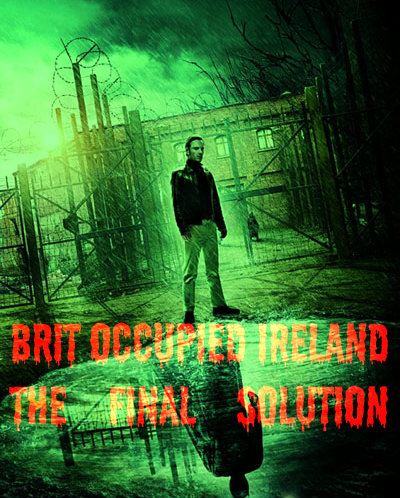
Ghengis Paterson and Reichsführer-SS PSNI Baggot, the unelected, unaccountable, English warlords overseeing the British peace process in Occupied Ireland, have decided as a humane PR gesture, to allow children to sit beside the chimneys of the mortuary at Auschwitz, to bid farewell to their their Irish parents as they ascend into heaven. As was announced yesterday the British government plans gas the Irish in Germany after they lease their Auschwitz concentration camp as part of the solution to the Irish problem. The Irish children will be placed on top of the state of the art gas chamber called, "The Little Green House," a luxurious gassing facility with green smoke from the fine dust of the mortal Irish parents, ascend into heaven as the British sanitize Ireland by exterminating all of the remaining Irish.
Brit Occupied Ireland the Final Solution
Ghengis Paterson and Reichsführer-SS PSNI Baggot, the unelected, unaccountable, English warlords overseeing the British peace process in Occupied Ireland, have decided as a humane PR gesture, to allow children to sit beside the chimneys of the mortuary at Auschwitz, to bid farewell to their their Irish parents as they ascend into heaven. As was announced yesterday the British government plans gas the Irish in Germany after they lease their Auschwitz concentration camp as part of the solution to the Irish problem. The Irish children will be placed on top of the state of the art gas chamber called, "The Little Green House," a luxurious gassing facility with green smoke from the fine dust of the mortal Irish parents, ascend into heaven as the British sanitize Ireland by exterminating all of the remaining Irish.

Nazi-like British Sinn Fein plan to appropriate everything the Irish own, amounting to trillions of Euros. They also plan to confiscate all records relating to Irish investments, bank accounts, deeds and insurance policies. It is believed that Lord Muck and his power sharing partner of the family Robinson have already approached the British Government and will be requesting the Queen on her forthcoming visit, that all insurance claims due on life insurance policies owed to the Irish by British companies, be paid directly to the Executive in Stormont, until any missing Irish policy holders can be located.

To further sanitize the process this modern form of gas genocide will be conducted, with high tech efficiency and friendly SS PSNI staff, have been instructed to assist the Irish holidaymakers, declared Reichsführer-SS PSNI Baggot's press secretary from London yesterday, assuring the public that all SS PSNI staff will be busy, working hard to ensure an enjoyable camp experience for the Irish genocide. Like the last engineered slaughter of an estimated 6.5 million Irish at the hands of the British Empire, it will not be permitted to call it genocide but simply an Irish cull, as was the case with famine last time Irish extermination was attempted.

It is understood that Ghengis Paterson and Reichsführer-SS PSNI Baggot, are considering a cull of all of the 80 million Irish diaspora worldwide, based on the sheer scale of the green menace posed by the Irish, which threatens all of the free world at this time. The 'final Irish solution' is to be screened as a series by the BBC to also solve their problem of falling ratings with embedded pundits, commentary and spin doctors to ensure the world has a thoroughly British take on proceedings. Whole families worldwide will be herded into their sitting rooms by the BBC world service, to watch lethal doses of the BBC on their TV screens, switched on by high-ranking BBC executives.

After many attempts of ethnically cleansing Ireland of its Irish inhabitants nuisnace, the plan by the two English warlords was sold to the BBC to notch up some fantastic ratings with the new Irish series. A BBC spokesperson was quoted as saying, "To up our dying ratings, we realised what was required was something never done before, like turning mass-killing of the Irish into mass-entertainment. The series will be called the Irish Internment of the Ghengis Paterson Reich. It will be very good box-office and it will save us from having to pay actors."

Like the current short-sighted strategy of political internment and the torture of Marian Price in occupied Ireland, the British didn’t envision in their last Irish holocaust, bringing eager revolutionaries into the Young Irelanders, the Fenian Brotherhood or the Irish Republican Brotherhood. Those who died in the last Irish holocaust provided martyrs for Ireland's cause, to drive the British off Irish soil whatever the cost, by any means, which later gave birth to the contemporary Irish Republican Army. The great hunger as the last Irish holocaust became known, brought a harvest of death that is still with us in modern-day Ireland but then unaccountable english overlords like Ghengis Paterson and Reichsführer-SS PSNI Baggot wouldn't know or care much about that.
Related Link: http://irishblog-irelandblog.blogspot.com/

                                                                           Video
Green Day - Good Riddance (Time of Your Life) - Holocaust Version
Cead Mile Failte, A Hundred Thousand Welcomes

Friday, April 27, 2012

CONCENTRATION CAMP AUSCHWITZ TO BE USED FOR IRISH


Auschwitz Concentration Camp for Interned Irish 

category international | rights and freedoms | opinion/analysis author Friday April 27, 2012 00:18author by BrianClarkeNUJ - AllVoices Report this post to the editors
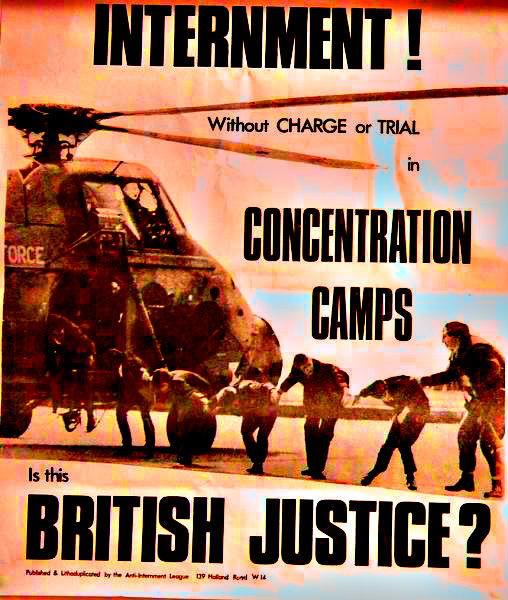
Political Internment Without Trial British Occupied Ireland
The British. government has asked Germany to lease their Auschwitz concentration camp along with other WW II internment camps, as part of their final solution to the Irish problem. One German official has said off the record, “We have these camps sitting empty since the 40′s, so we may as well put them to use. They may take a bit of refurbishing but, there is no question we can get them up and running quickly.” With the breakdown of the peace process in Ireland following British non-compliance, Auschwitz with its gas chambers has now being agreed by Furhrer Fuhrer Paterson with his unelected fellow Englsih Reichsführer-SS PSNI Matthew Baggoas as their final solution, to liquidate the Irish problem in Occupied Ireland.
POLITICAL INTERNMENT WITHOUT TRIAL BRITISH OCCUPIED IRELAND
The British. government has asked Germany to lease their Auschwitz concentration camp along with other WW II internment camps, as part of their final solution to the Irish problem. One German official has said off the record, “We have these camps sitting empty since the 40′s, so we may as well put them to use. They may take a bit of refurbishing but, there is no question we can get them up and running quickly.” With the breakdown of the peace process in Ireland following British non-compliance, Auschwitz with its gas chambers has now being agreed by Furhrer Fuhrer Paterson with his unelected fellow Englsih Reichsführer-SS PSNI Matthew Baggoas as their final solution, to liquidate the Irish problem in Occupied Ireland.


Auschwitz concentration camp a network of concentration and extermination camps, used by the Third Reich was annexed by Nazi Germany during World War II. The largest of the German concentration camps, Auschwitz has now being designated by Owen Paterson the British successor of Ghengis Khan for occupied-Ireland and his fellow englishman, the Reichsführer-SS PSNI Matthew Baggot from London, as the place for the "final solution of the Irish question in British Occupied Ireland". Friendly SS PSNI staff will were there to assist the Irish holidaymakers according to Baggot's press secretary from London who has assured the public that all SS PSNI staff will be very busy, working hard to ensure the camp experience is as enjoyable as possible for the Irish. 


The British plan helicopters and transport trains via the port of Dun Laoghaire, with the compliance of the other British neo-colony in Dublin to deliver the Irish to the internment camp's gas chambers from all over occupied-Ireland. Presently there are quite a few Irishmen interned without trial by the British, along with a woman called Marian Price who has been tortured in solitary confinement for almost a year now without trial.There are also some Irish in British prisons who after interrogation at the PSNI Gestapo headquarters are now imprisoned in British Nazi camps for political prisoners, for years waiting vainly for some sort of a trial even without a jury, with a chance to plead their case. They are also discussions with the Government in the south to operate a form of compulsory emigration on all of the island, to get rid of the dole queues, those on disability and some of the younger old age pensioners, to give these excess Irish some work experience, after they pass through the iron gates crowned with the infamous motto, Arbeit macht frei "work makes free."


The Irish will initially have to work in the associated munitions factories, except on Sundays, which are reserved for cleaning and prayers. The harsh work requirements, combined with poor nutrition and hygiene may lead to some collateral damage or deaths among the prisoners prior to gassing after they are past their sell by date. Within Auschwitz there is a "prison within the prison", where dissident Irish will be punished by being forced to spend their nights in "standing cells" which are similar to Marian Price's current cell, where they will be forced to dance a few jigs and then work with other prisoners during the day. The "starvation cells" in the basement is where prisoners will get neither food nor water until they are dead, as opposed to the force feeding last time of Marian Price for 200 days on hunger strike.


The basement also has "dark cells"; with just a small tiny window and solid door, where the Irish will be placed in cells to slowly suffocate to prevent any further waste of Britain's free, precious, dwindling, oxygen supply in Ireland. Some of the unrepentant Irish fenians, will be hung with their hands behind backs for days, occasionally dislocating some of their joints, similar to the effects of torture treatment for which Britain was already found guilty by the European Court of human rights in Strasburg. It is understood that Fuehrer Paterson has already given the order for the final solution of the Irish problem to his fellow englishman, the the Reichsführer of the SS PSNI, to carry out the order.


Later on the British plan to use Zyklon B for extermination at Auschwitz in its gas chambers with a state of the art crematorium to burn all evidence of the Irish off the face of the earth, as the previous British Holocaust engineered by the British famine while killing over 6 million was unsuccessful in eradicating all of them.The extermination camp, is designed to hold several categories of Irish political prisoners ultimately being an extermination camp, after they get a bit of work out of them. The first gas chamber will be called, "The Little Green House," a luxurious gassing facility, so named because the smoke will be green with fhe fine dust of their mortal Irish bodies, ascending to heaven, as a tribute to their centuries of suffering in their vale of tears in Ireland, where it is planned to exterminate all of the remaining Irish, with the exception of Martin McGuinness who has given it the nod in Stormont, accepting in the interest of cross community co-operation, the extent of the cold-blooded slaughter, based on the sheer scale of the menace posed by the Irish, which threatens the free world at this time.


Fuhrer Paterson has fully committed the British to this final solution, to exterminate all of the Irish no later than Easter 2016, as an extension of the existing part of Britain's peace process of internment without trial. The British have decided to increase considerably the gassing capacity, along with the mortuary, morgues in the basement with ground-level furnaces converted into a slaughter house for the Irish, with gas-tight doors in the morgues with Zyklon B gas. The camp will be staffed by prison warders selected from Maghaberry prison, along with some Loyalist convicts. The staff will be supervised by members of the SS PSNI, hiring about another 6,000 SS PSNI members to work at Auschwitz. Due to the large size of the British Nazi genocide project for the Irish at Auschwitz Concentration Camp, personnel from Sinn Fein will be offered some power sharing areas of responsibility modules with generous remuneration. Unfortunately because some dissidents perceive current British policy in occupied Ireland by the english Fuhrer and his Reichsführer-SS PSNI as fascist. it has produced the return of politically incorrect humour which Paterson plans to exterminate. The story below is an example which will probably be censored or interned without trial 


During the last war preceding the next one, a Scottish, an English and an Irish soldier were captured by an S.S. officer, who says,“ Before du go in to die concentration camp, I vill give each of you vone hundert lashes , but since yous have vought bravely I vill give you one vish each.” He turns to the Scot and asks him,“Vhat is your vish ? ” The scottish soldier replies, “I would like one of your wee S.S. jackets to put on me when you are whipping me ”“Your vish is granted,” says the S.S. officer and he gets a leather S.S. jacket to put on the Scot and when he has it on, he gives him one hundred lashes with his whip, then the Scottish soldier crawls into the concentration camp.


Next the S.S. officer says to the English soldier, “Du have vought bravely also, Vhat ist your vish?”The English soldier replies, “I would like a mattress to put across my back, old boy!” The S.S. officer putsts a mattress across the English soldier’s back and gives him one hundred lashes who then crawls into the concentration camp. Then the S.S. officer goes to the Irish soldier and says, “Du have also vought bravely , even more bravely than sie other two , for this I vill give du two vishes ” Immediately the Irish soldier replies, “ Arragh, I would like two hundred lashes!” The S.S. officer replies, “Are du sure?” “Yes I am!” replies the Irish soldier. The S.S. officer then says, “Fair enough, then vhat vould your second vish be??”
The Irish soldier then replies, “Put that english bastard on my back!!!”
Related Link: http://irishblog-irelandblog.blogspot.com/

Cead Mile Failte, A Hundred Thousand Welcomes